
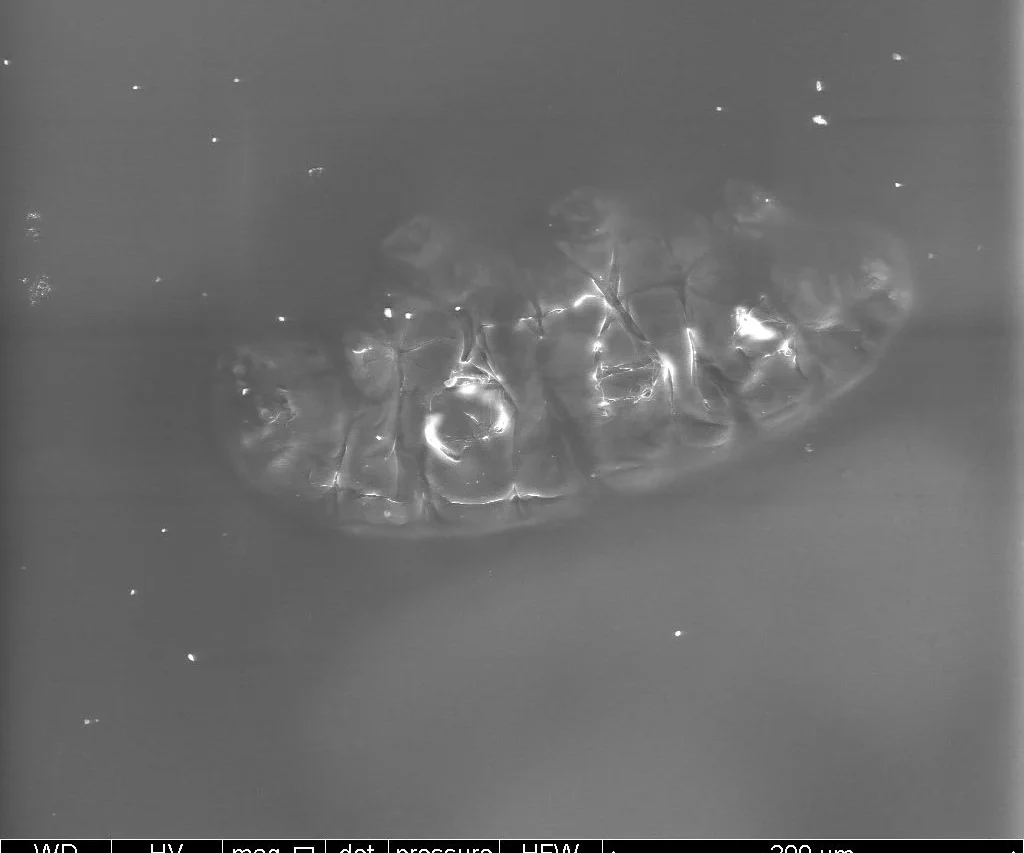
A tiny animal can return from the vacuum of space, yet a long spell of heat can kill it. That odd contrast is the real story behind tardigrade survival limits.
Under a microscope, a water bear looks like a small, soft backpack with eight legs. Its fame comes from a far less cute skill: it can wait out some harsh settings by shutting much of life down.
But waiting is not the same as living without rules. The species, its body state, the stress, and the time all matter.
A water bear lives in a very small world
Tardigrades are tiny animals that live in water or thin films of moisture. Many land species become active when their surroundings are wet. Their famous hardiness is not a constant shield; it often depends on entering a protected resting form before a harsh event.
Picture a damp patch of moss after rain. To you, it is a green cushion; to a tiny animal, its spaces can hold a shifting world of water, food, and shelter.
When that water film dries, daily life becomes a problem. Moving, feeding, and keeping cells in working order all depend on the settings around the animal.
The most useful water bear facts start here, close to the ground. Tardigrades did not evolve to entertain space fans; their survival tools make sense in places where water can come and go.
There is also no single water bear blueprint. Different species live in distinct settings and show distinct strengths under stress.
That means a record from one species cannot stand in for every tardigrade. It is like testing one desert plant and deciding all garden plants need no rain.
Size adds another twist. A change that seems minor in a backyard can be a full crisis within a drop of water.
A researcher thus needs to know which animal was tested, how it was raised, and what state it was in. Without those details, a claim about toughness is only half a claim.
The tun is a pause button with settings
A tun state is a compact form that many tardigrades enter as they dry. During cryptobiosis, activity falls to extremely low levels. This can help them endure a lack of water, but it requires protective changes within the body and does not promise recovery every time.
The animal draws in its legs and loses the busy shape that makes it look bear-like. What remains looks closer to a small barrel.
This change is not a nap with a few missed snacks. Water loss creates risks for membranes, proteins, and other parts of cells.
If those parts fail, adding water later will not bring the animal back. Successful desiccation tolerance means getting through both drying and the return to wet settings.
Research has found families of heat-soluble proteins linked with this ability. Their roles and history vary, which is another reason to avoid treating all species as copies.
Think of packing a fragile room for a move. The walls, contents, and wiring need to remain usable after the trip; merely locking the door will not do.
That comparison is a guide, not a literal description of a cell. The real machinery works at a scale too small to see with a household lens.
A tun state may look still, but its success rests on a series of changes. The tiny shape is the visible end of a much deeper process.
The word cryptobiosis can sound like a magic spell. It names a survival strategy whose strengths can be tested, and whose failures can be tested.
Heat exposes the limits of the legend
Tardigrade survival limits become clear when scientists vary both temperature and exposure time. Dry animals may tolerate a brief heat shock far better than active ones. Yet longer heat exposure lowers survival, showing why a single dramatic temperature cannot describe what these animals can safely endure.
A headline might say that water bears survive extreme heat. A useful follow-up is, for how long?
In tests on Ramazzottius varieornatus, active animals proved much more heat-sensitive than dry animals. Drying offered an advantage, but it did not erase the clock.
One study estimated that the temperature linked with half the dry animals dying dropped from about 83 degrees Celsius for one hour to about 63 degrees for a full day. Those values describe a test, not a general safe range for every water bear.
A later study extended the exposure to a week. Its estimated halfway mortality point fell again, to about 56 degrees Celsius.
The lesson is easy to miss because the shortest test produces the most exciting number. Time turns a spectacular stunt into a far harder challenge.
Scientists also need a clear way to judge survival. Movement after rehydration is useful, but the timing of that check matters.
A species name, a dry or active state, and a set duration make a result useful. Remove those details and the number becomes a badge, stripped of its limits.
Space survival is not a space lifestyle
Tardigrades in space survived parts of a real orbital test while in a dry form. That result shows unusual resistance, not a need for no habitat. An animal that survives exposure still needs suitable settings to resume feeding, growing, and reproducing once the test has ended.
In 2007, the European Space Agency carried tardigrades on the Foton-M3 mission. Dry animals faced settings that would destroy many unprotected organisms.
The results made water bears famous far beyond biology labs. They also created an image of a tiny animal strolling through space as though it were crossing a lawn.
That is the wrong scene. The test tested survival during exposure, followed by a return to settings where recovery could be checked.
A sealed seed packet and a growing garden are not the same thing. Likewise, lasting through a harsh interval is distinct from running an active life in that setting.
Claims about radiation, vacuum, and sunlight also need separate treatment. These stresses can act in distinct ways, and surviving one combination does not guarantee survival in another.
The strongest question is not whether the animal is invincible. It is which settings the test used, how many animals recovered, and what recovery meant.
This approach makes the story more interesting. Instead of a mascot with endless powers, we find a body with clear tools and real weak spots.
Tardigrades in space gave scientists a rare chance to test those tools outside the usual lab. It did not turn the rest of ecology off.
What small cells may teach large animals
Tardigrade proteins offer clues about DNA protection and the preservation of cells under stress. Those clues are promising research leads, not ready-made human upgrades. A protein that helps in one cell type can behave differently in another, so useful applications require careful tests of both benefit and harm.
One protein called Dsup, short for damage suppressor, has drawn interest for its links to DNA protection. Scientists are still working out the full picture of how it acts.
The tempting leap is to picture a person borrowing water bear toughness. Science moves through smaller steps: a protein, a cell, a tested effect, and a check for side effects.
A study of Dsup in cultured rat neurons found damage rather than a simple benefit. That result is a firm reminder that a useful trait can depend on its setting.
A cell is not an empty box waiting for one heroic part. It is a network, and changing one part can alter other jobs.
The same care applies to efforts to preserve materials through drying. We need to know what remains stable, how long it stays that way, and whether it still works after water returns.
There is plenty of wonder left without promising a cure or a space-proof human. A tiny creature has evolved ways to survive gaps in the settings it needs.
It can stop, endure, and sometimes restart. Each of those verbs hides a distinct problem for scientists to solve.
The most striking water bear fact may be its limits. Those limits tell us where its tools work, where they fail, and where a new test should begin.
Frequently Asked Questions
These answers address common questions about this topic, with a focus on what the evidence supports and where it stops. They separate tested results from popular claims, so you can leave with a clear picture rather than a longer list of myths.
Can tardigrades survive boiling water?
Some dry tardigrades tolerate short, severe heat exposure, but this does not mean they can live in boiling water. Species, body state, and exposure time all affect survival.
Are tardigrades immortal?
No, tardigrades can die from heat, injury, and other stresses. Their resting strategies improve the odds in certain settings; they do not remove the needs or limits of an animal body.
Can humans use tardigrade proteins for space travel?
Scientists study these proteins for possible protective uses, but they are not proven space-travel treatments for people. A useful result in one type of cell does not show safety or benefit in a whole human body.