
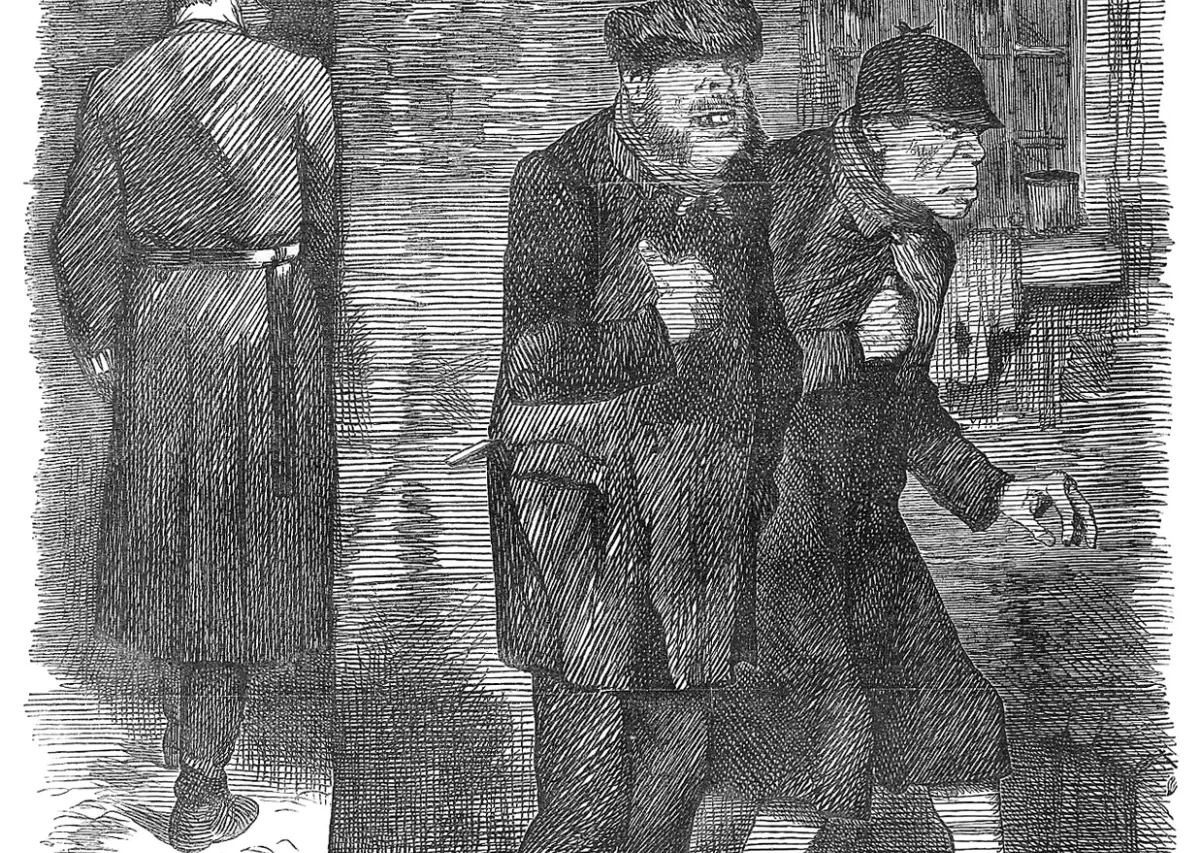
The most famous name in this murder case may have come from a hoax. That alone should make us pause before trusting the next headline about Jack the Ripper evidence.
In 1888, women died in London's East End while police faced a flood of fear, tips, and false claims. Over time, a dramatic nickname grew larger than the lives of those women.
A careful account brings them back into view. It also draws a firm line between a record, a guess, and a tale that feels good because it gives us an ending.
Begin with the women, not the nickname
The five women commonly linked with the Whitechapel murders were Mary Ann Nichols, Annie Chapman, Elizabeth Stride, Catherine Eddowes, and Mary Jane Kelly. They lived under severe hardship, but had lives beyond the crimes. Their names and lives belong to history; they are not props for a killer’s tale.
Say the names slowly. Each stands for a person, not merely a place on a timeline.
The National Archives describes women who had worked, loved, and faced deep setbacks. Poverty and unstable housing shaped their lives, but those settings did not define their worth.
Older reports often used harsh labels as if a woman's social position could explain what happened to her. That framing can pass from an old newspaper into a modern article without being questioned.
Ripper victims deserve better than a copied stereotype. Where evidence for a claim about work or behavior is limited, the doubt belongs in the sentence.
A reader should not have to accept a moral judgment to understand a crime. Blame for the violence rests with the person who did it.
We do not need to invent a victim's last thoughts to make her life matter. Made-up thoughts might move us. They can also replace a gap with a false scene.
A name, a documented job, or a housing problem can be enough to anchor focus. That care leaves space for a real person. She does not need to be a character built for suspense.
A file is stronger than a familiar tale
Historical crime records preserve police work, letters, and later views, but not all their contents are sound. A document proves that someone wrote a statement at a certain time. It does not prove the statement was true, complete, based on direct knowledge, or free from bias.
An archive can feel like a room full of final answers. In practice, it is often a room full of traces left by people who knew only part of the story.
A police report may contain a direct finding, a witness account, or a view formed from other reports. Those are distinct kinds of material, even when they sit on the same page.
Start with four plain questions. Who made the record, when was it made, how did that person know, and what was the record meant to do?
The National Archives holds a police report from 1894 that discusses suspects. Its value is not that it magically resolves an unsolved murder case.
Its value lies in what it shows about one official's later view. A named suspect in that document remains a suspect, not a person proved guilty by the mere fact that the paper exists.
When reading historical crime records, keep the verbs clear. A witness said, an officer believed, a report listed, and a court proved do not mean the same thing.
That habit may seem small. It stops cautious statements from turning into firm claims as they are told again and again.
The letters made a noise that still echoes
Ripper letters helped build the killer's public image, yet the National Archives says there is no strong evidence that any were written by the murderer. Hundreds of claims reached officers. A famous signature thus belongs to the history of the case without being a sound account from the criminal.
A vivid voice is not proof. A hoaxer can create a vivid voice without knowing anything useful about the crime.
One preserved letter claims the Jack the Ripper name and threatens more violence. The archive identifies it as a hoax. It shows a false claim that wasted time.
It does not reveal the killer's mind.
The Ripper letters matter because they show how an inquiry can be crowded with noise. Each claim asks for focus, even when the claim is false.
It is tempting to read style as identity. A cruel sentence may sound like something a murderer would say, but many people can write a cruel sentence.
A stronger test asks what the writer knew. Could it be checked, and was it already public? It also asks how the document reached officers and whether its history is clear.
A careful article can explain the power of the letters without reproducing threats for fun. Their lasting lesson is about details: the loudest voice in a file may be the least trustworthy.
Why a promising theory can outrun its proof
A suspect theory needs evidence that distinguishes one person from other plausible candidates. Place, opportunity, or a troubling life story may help frame questions, but cannot show guilt alone. Claims about Jack the Ripper evidence must also address source quality, missing records, and reasonable alternative explanations for the same clues.
A map with marks close together can look persuasive. Yet a person living near a crime may share that place with many others.
If a method suggests a likely area, it has narrowed a question. It has not named a murderer by itself.
The same limit applies to a life story. A difficult life or a reported mental illness is not evidence that a person committed a given crime.
Now picture building a theory from five weak clues. Their number may look impressive, but if each clue comes from the same doubtful rumor, they are not five separate supports.
The key is whether the clues have separate roots and whether they rule out alternatives. An argument should grow stronger because of its quality, not its length.
Victorian policing records also require care about later assumptions. We cannot use a modern tool on an old object while ignoring who handled, stored, or labeled that object before the test.
This is a general evidence rule, not a finding that any named person was guilty or innocent. The burden belongs to the claim that promises a solved case.
A sound account gives readers the chance to see that burden. It names the test and explains what it can show. It keeps each doubtful step in view.
The honest answer may remain open. That beats an ending built from gaps.
Read the mystery without feeding the legend
The Whitechapel murders remain an unsolved murder case, so a useful account explains the limits as well as the clues. It centers the victims, avoids graphic spectacle, and marks new claims as claims. Readers gain more from a clear evidence trail than from a confident but unsupported final reveal.
There is a simple way to test a new story about the case. Ask what would have to be true for its conclusion to follow.
Then look at every step between the source and the claim. If the story jumps from an uncertain object to a certain name, the missing steps matter more than the headline.
Good writing can still hold attention without hiding those steps. A reader can follow a document through an archive, compare dates, and see how a small detail changes a question.
Suspense comes from the search, not from treating women as props or turning the criminal into a folk hero. Ripper victims should remain visible wherever the story travels.
Choose instead to explain one kind of evidence well. A letter, a report, or a map can teach more when its limits are clear.
The modern reader has an advantage: easy access to many historical crime records. That access is most useful when paired with patience about what each record means.
The case does not need an invented answer to matter. It can reveal how fear spreads, how hardship increases risk, and how public focus can drift away from people who were harmed.
Frequently Asked Questions
These answers address common questions about this topic, with a focus on what the evidence supports and where it stops. They separate tested results from popular claims, so you can leave with a clear picture rather than a longer list of myths.
Has Jack the Ripper been officially identified?
The National Archives describes the murderer as never caught. Modern suspect claims should be treated as theories unless their evidence establishes an identity rather than merely suggesting one.
Were the famous Ripper letters genuine?
There is no strong evidence that any surviving claimed letter was written by the murderer, according to the National Archives. Their importance lies partly in the confusion and public image they helped create.
Does finding a likely home area solve the case?
No, a suggested area can guide inquiry but cannot identify a person on its own. A conclusion about guilt needs sound evidence linking a given person to the crimes and addressing other sound ways to read the clues.