
The tools that kept a Viking household alive were often a spindle, a cooking pot, and a sickle. A sword made a better story, but it could not turn wool into a warm coat or bring a field of grain safely through the harvest.
Viking Daily Life was built around those quieter tasks. Across much of Scandinavia, families lived on farms rather than in towns, and most people spent far more time working than fighting.
Picture a household at first light. There is fuel to fetch, livestock to tend, and a meal to prepare before the longer work begins. This is a scene drawn from the needs of farm life, not a record of one named family’s morning.
Archaeology lets us step closer through broken pots, animal bones, house foundations, and worn tools. Each find is small, but together they replace the horned-helmet cartoon with people whose days depended on weather, skill, status, and other people.
A Home Built Around Work and Warmth
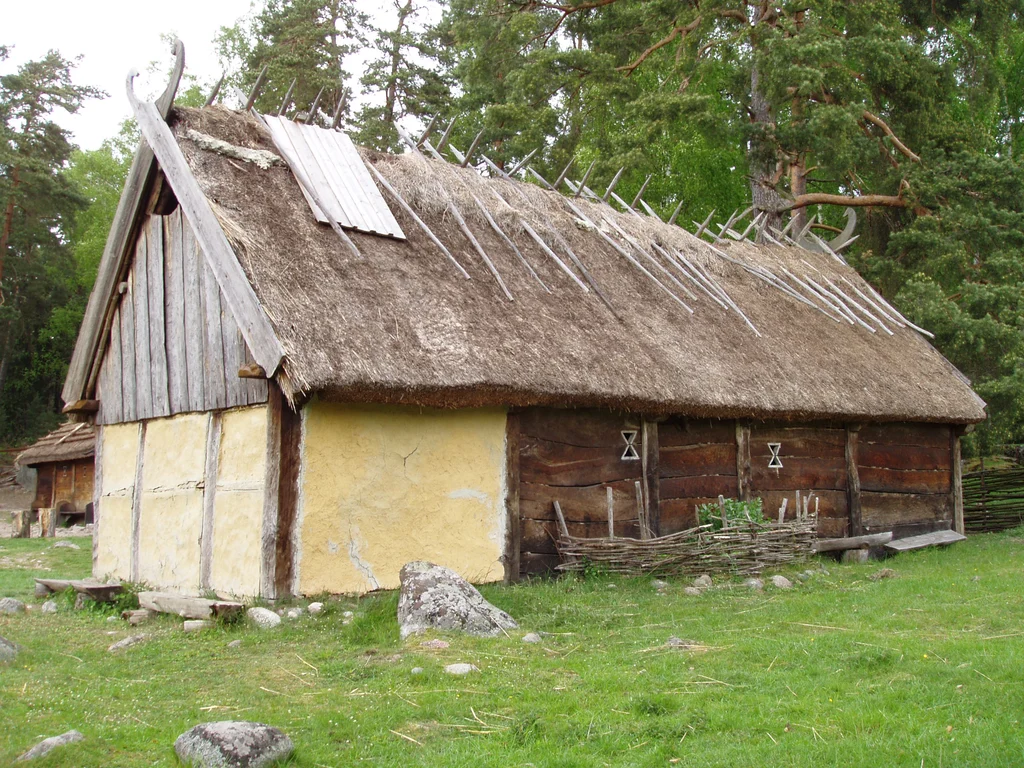
A Viking longhouse was the main building on many farms, but it belonged to a wider working space. Barns, pens, and workshops served different needs. The home offered shelter and a shared center for daily tasks, while wealth and local resources shaped its size and finish.
Imagine entering after rain. Wet clothes, food preparation, and a fire would all affect the room’s feel, though the exact smells and sounds cannot be recovered from an excavated floor. That is why a vivid reconstruction should stay tied to the practical uses of a home.
Wooden buildings survive poorly in many places. Archaeologists often read a house through dark marks left by posts, floor traces, and objects in the soil, rather than through standing walls.
For a modern reader, the most striking change is the lack of neat boundaries. Home was a place to live and a place to produce goods they needed. The working day did not end simply because someone stepped indoors.
Nor should we turn that closeness into a cozy fantasy. A household could contain sharp differences in power. People sharing a roof did not all share the same rights, safety, or freedom to leave.
The Meal Started Months Before the Bowl
Viking food depended on the season, local land, livestock, and access to exchange. Grain, fish, meat, dairy foods, fruit, and vegetables all mattered. The real challenge was planning enough food beyond the next meal, especially when winter limited fresh supplies and farm work faced setbacks.
A bowl of porridge is easy to picture. The chain behind it is longer: land must be worked, a crop grown, grain gathered, and the harvest stored. The plainest meal could hold months of effort.
This changes how we read a feast. A rich meal showed access to resources and labor, not just a love of eating. Plenty at one table tells us little about what every nearby household could afford.
The National Museum of Denmark points to plant remains and animal bones as strong evidence for diet. These scraps can speak more directly than a tale written long after the period it describes.
Bones may show which animals were used, while plant remains can reveal crops or gathered foods. Yet a find needs context: waste from a large gathering may not match an ordinary supper.
Viking food was also regional. A household with good access to fish faced different choices from one whose food supply centered on crops and livestock. Treating the whole Norse world as one menu hides that variety.
There was no need for every worker to grow every meal personally. A craft worker might exchange goods or buy food through a market. Self-sufficiency was key, but it did not erase local links between people.
The clever part was not a secret recipe. It was managing time, supplies, and risk well enough that tomorrow’s dinner could still exist.
The Hands That Made the Household Run
Norse women often managed the home and carried out food and textile work, while household members shared many tasks. Clothing required skilled effort long before it could be worn. Social position shaped a person’s duties, and the world of free families also depended on exploited labor.
Viking clothing began as material that someone had to prepare. Wool needed work before it became yarn, and yarn needed more work before it became cloth. A garment was a chain of tasks worn on the body.
That makes a small spindle whorl a serious clue. It points toward an work easy to overlook in stories that give all their attention to ships. Domestic production kept people warm and made wider ventures possible.
Evidence for Norse women includes objects, burials, and texts, but each source needs care. A grave is a choice made by people who buried the dead, not a complete record of the life that came before it.
The museum describes women managing farms when men left on expeditions. This was duty with real stakes: a failed harvest could threaten the household, whatever adventure was happening far from home.
Viking clothing also expressed status. Local wool and flax supplied ordinary needs, while costly imported fabrics and fine jewelry could mark wealth. A bright detail at a feast might announce a distant connection.
Behind the household stood another reality. Enslaved people could be bought, sold, and forced to work. An honest portrait has to place that loss of freedom beside the skills and comforts admired in museum displays.
The World Arrived at the Market
Viking trade linked farms, craftspeople, and ports with routes reaching beyond Scandinavia, while markets brought practical tools and luxury goods into circulation. Silver could be weighed for payment, while direct exchange also remained useful. These connections mixed peaceful business with political power, danger, and the trade in people.
At Hedeby, in what is now Germany, waterways and land routes helped make a busy meeting point. A town’s location could matter as much as the talent of an one merchant.
Farm goods could move toward a market, and tools or jewelry could move back out. This gave households access to things they could not easily make themselves, although access depended on what they had to offer.
Viking trade required trust of a practical kind. A seller needed a safe place to display valuable goods, and a traveler needed some chance of arriving with those goods intact. Power helped create the conditions for business.
The National Museum describes rulers protecting and taxing trading centers. A market was not a modern free-for-all set outside politics. Its success could enrich the authority that guarded it.
Small scales and pieces of silver offer a different image from a purse full of identical coins. Payment by weight required attention to the material itself, and cut objects could become part of a transaction.
It is tempting to draw a clean line between trader and raider. The evidence for wide connections makes the picture less tidy. Goods, captives, wealth, and power could move through overlapping networks.
There Was More to an Evening Than Battle
Viking games, storytelling, music, and feasts offered ways to spend time with others. Gaming pieces survive where spoken jokes and ordinary conversations do not. These finds show leisure existed, but they cannot tell us how often every household played or exactly how each gathering felt.
A carved game piece fits in the hand and makes the past feel close. Someone once used it within rules that other players understood, perhaps with pride, impatience, or laughter that left no mark in the soil.
Viking games included board games and dice. The museum also describes hnefatafl, a contest centered on protecting or capturing a king piece. Surviving objects give firm evidence for play, even when details of rules require study.
Bone skates show another use of skill and material at hand. Winter could create routes and forms of fun as well as hardship, though a pair of skates does not mean every child owned one.
This is where ordinary life resists the screen version most strongly. Not every moment prepared a person for battle. People needed company, amusement, and relief from work, just as they needed food and shelter.
Still, a game board cannot erase an unequal society. Time for play, the quality of the pieces, and the setting all depended on each person’s needs. Leisure tells us about people, not about a lost paradise.
The next time a Viking ship appears in a story, picture the home it left behind. Someone kept the animals fed, the cloth growing, and the stores in order. The voyage was dramatic; the daily work made it possible.
Frequently Asked Questions
These questions cover the details readers most often want to check before sharing this story. The answers separate what the evidence supports from what remains uncertain. They also explain why a clear account needs limits, even when a dramatic version would be much easier to remember.
Were all Vikings warriors?
No. Many people in Viking Age Scandinavia were farmers, while others worked as craftspeople or traders. Raiding mattered, but it does not describe every person’s daily occupation.
What did ordinary Vikings eat?
Their meals could include grains, dairy foods, fish, meat, and available plants. Diet varied by season, region, wealth, and access to food through farms or markets.
Did women work outside the home?
Some evidence points to women involved in production and wider economic work. Home itself was also a place of key work, so a modern divide between housework and a job can mislead.