
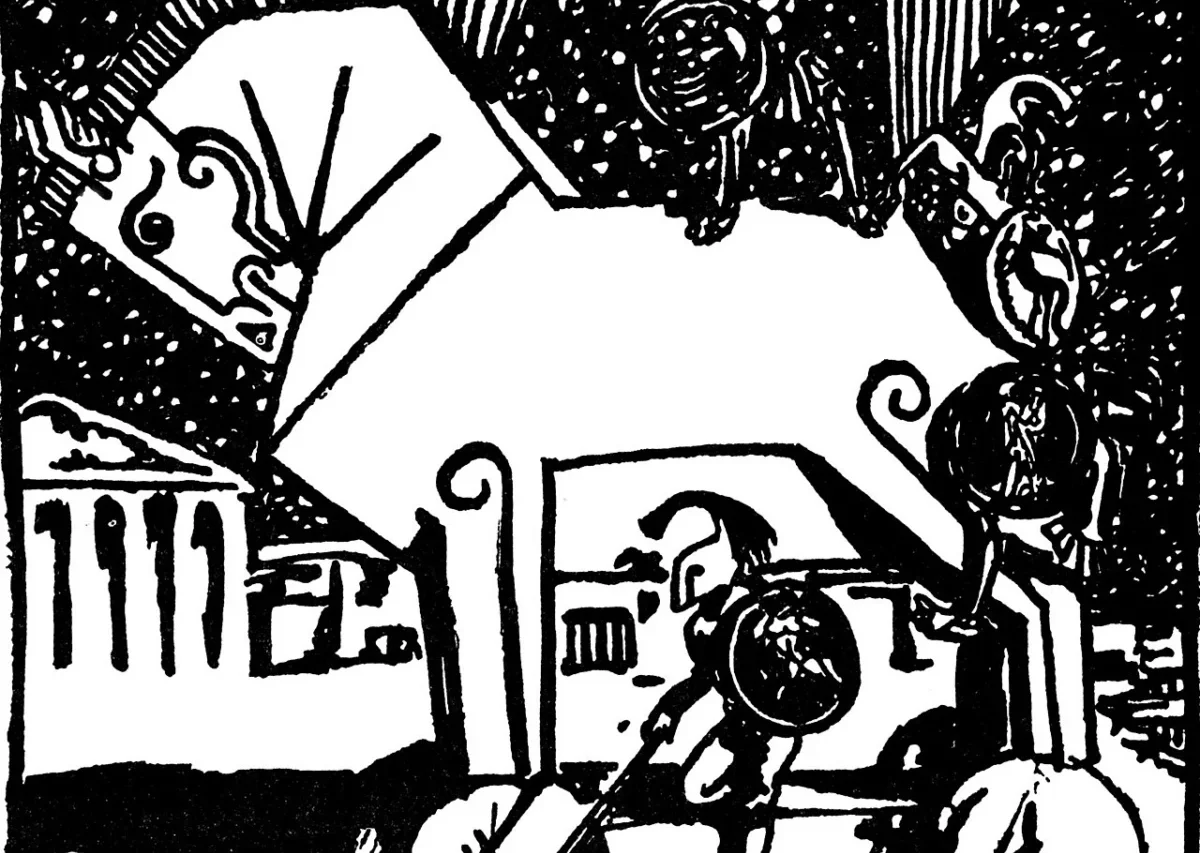
The city’s enemies are gone, and a huge wooden horse stands outside the walls. To exhausted people, it looks like the end of a war. To the soldiers hiding inside it, it is the beginning of the final attack.
That is the trap at the heart of the Trojan Horse real story. Yet the words “real story” need care: a famous ancient tale and a proven ancient event are not the same thing.
The horse lives in epic poetry. Troy also exists as a site of ancient remains. Understanding how those two facts connect is more rewarding than choosing between total belief and total dismissal.
The Horse Is Older Than Virgil’s Famous Scene
The horse appears in Homer’s Odyssey, where a song recalls the trick that brought Troy down. Virgil later gives the episode a longer, darker treatment in the Aeneid. These poems show that the story was established in antiquity, but they do not provide eyewitness reporting.
Many readers expect the horse to appear at the end of the Iliad. That poem instead closes with Hector’s funeral, before the destruction of the city.
Homer’s Odyssey looks back on the war from a later point in the heroes’ lives. At a feast, Odysseus asks the singer Demodocus to perform the story of the horse.
The request is painful. Odysseus hears his own past turned into a public song while the people around him still do not know his identity.
A hero listening to his own legend
This setting matters because the tale reaches us through performance within a poem. It is already a remembered story shaped for an audience.
The Odyssey credits Epeius with building the horse with Athena’s help. It links Odysseus to the plan.
Virgil’s Aeneid tells the episode through Aeneas, a Trojan survivor.
Reading the two works together lets us see the same trick through different doors. One points toward a hero’s cunning; the other asks us to stand with the people who suffer when that cunning works.
How the Gift Becomes a Weapon
In Virgil’s account, the Greeks hide warriors in the horse and move their fleet out of sight. A man named Sinon then persuades the Trojans to accept it. The plan works because military concealment and a convincing explanation support each other at the right moment.
The wooden horse of Troy is more than a box with legs. Its danger depends on what the Trojans believe it means.
Sinon supplies that meaning in Virgil’s version. He presents himself as a victim of the Greeks and describes the horse as an offering connected with Athena.
The apparent retreat helps his story. An empty beach gives the city a visible reason to hope, while the stranger offers a way to explain the object left behind.
A lie built around relief
Imagine the scene as a reading of the poem: people who have lived under threat now face the chance of safety. That relief can make a welcome answer feel stronger than a troubling question.
The trick does not require every Trojan to be foolish. It requires the winning reading to silence the warnings that would delay the decision.
When the horse enters the city, its shape does two jobs. It appears to honor a god while hiding the means of an attack.
The lesson is not simply to distrust gifts. It is to inspect the assumptions that make a gift seem harmless.
Odysseus and the horse remain memorable because force alone has failed. The attackers need their enemy to finish the last step of the plan for them.
The Warnings That Make the Ending Hurt
Virgil gives the Trojans warnings before the horse enters their city. Laocoon challenges the gift, while Cassandra’s prophecy goes unheard. These moments deepen the tragedy: danger is not wholly invisible, but the people who name it cannot make their warnings determine the decision.
Laocoon objects to the horse and strikes it with a spear. For a moment, the poem brings suspicion close to the truth.
Then sea serpents kill the priest and his sons. The Trojans read the terrible scene as a sign that he has offended the goddess by attacking her gift.
Within the poem, that reading helps reverse the effect of his warning. The very man who urged caution becomes a reason to abandon it.
When the right question loses
This is a story scene involving gods and omens, not an account based on excavated remains. Still, its human tension is easy to recognize.
A group can hear a sound warning and prefer a story that removes discomfort. Confidence can spread faster than careful thought, especially when people want a threat to be over.
Virgil also places Cassandra at the edge of the disaster. Her warnings cannot change what the city chooses to do.
The poem then turns joy into risk. Night arrives, the returning Greeks approach, and the hidden soldiers leave their shelter.
The fall of Troy is devastating in this telling because the audience sees the gap between what the city believes and what the horse contains. We know the ending, yet the missed chances still make it hurt.
What Archaeology Can Tell Us About Troy
Troy is a real archaeological site at Hisarlık in modern Türkiye, with remains from many periods of occupation. Its walls and buildings help researchers study a long-lived settlement. They do not, by themselves, confirm a wooden horse, the poem’s heroes, or every event in the legend.
A visit to Troy puts real stone under a famous name. UNESCO recognizes the site’s long history and its place in contacts between Anatolia and the Mediterranean world.
That is meaningful Trojan War evidence in a broad sense: the stories concern a region where ancient groups, trade, defenses, and conflict can be studied.
It does not mean an excavated wall proves a particular scene from an epic. A city can be real even when the stories told about it mix memory, invention, and divine action.
Keep each claim at its proper size
Separate three questions. Did a settlement exist? What happened to it in a given period?
Did the horse trick happen as the poems describe?
The evidence needed gets more exact with each question. Buildings can answer the first; careful dating and context may help with the second.
The third requires a connection to the particular device and plan. A dramatic headline about wood found near a site cannot supply that connection on its own.
Wood is also a difficult material to preserve over a long span. Its absence cannot settle every detail of an ancient event. But poor preservation does not allow us to claim an event occurred.
A responsible account keeps both limits in view. The horse remains a famous written tradition rather than a confirmed discovery of ancient remains.
Why the Trick Still Feels Familiar
The horse endures because its danger arrives in a form that people welcome. The story explores trust, exhausted judgment, and hidden intentions. Those themes help explain its lasting appeal even for readers who do not treat every detail of the ancient narrative as historical fact.
The horse has a shape children can picture and a problem adults recognize. Something that looks useful can carry a cost no one has checked.
Its power as a metaphor depends on that change of meaning. Outside the walls, it is a prize or an offering. Inside them, it becomes a weapon.
We can also see why the plan belongs so closely to Odysseus. His skill lies in reading a situation and finding a route that brute force cannot open.
But the Trojan view makes that praise hard. A brilliant plan for one side can become a night of terror for the other.
Read with both sides in mind
That is one reason to read Homer and Virgil rather than only a plot summary. Their scenes carry fear, pride, grief, and the burden of memory.
Aeneas does not recount the destruction as a tidy puzzle solved by the smartest person. He speaks as someone whose home is gone.
The Trojan Horse real story therefore has two layers worth keeping. The written layer shows how ancient poets made a trick unforgettable; the historical layer asks what other evidence can establish.
Neither layer needs to erase the other. You can stand before the ruins, enjoy the poems, and still resist the urge to turn every carved horse or exciting claim into proof.
The most unsettling detail is the final act of help. The attackers create the trap. But the people inside the city bring it through their own defenses.
Frequently Asked Questions
These questions focus on the line between a powerful story and the evidence behind it. The short answers explain what researchers can support, what ancient writers actually describe, and which tempting claims still need proof before we can treat them as established facts.
Is the Trojan Horse in the Iliad?
The Iliad ends with Hector’s funeral before Troy falls. The horse appears in Homer’s Odyssey, and Virgil gives it an extended dramatic treatment in Book Two of the Aeneid.
Who built the wooden horse in the ancient story?
The Odyssey names Epeius as its builder, aided by Athena. Odysseus is closely associated with the plan and the hidden warriors, so popular retellings often give him most of the credit.
Have archaeologists found the original Trojan Horse?
No verified discovery of ancient remains establishes the original horse described in the poems. The remains of Troy confirm a real settlement, which is a different claim from proving its famous written trick.