A duck painted on a wall can outlast the lunch it once advertised by almost two thousand years. At Pompeii, bright birds still stand above a stone counter where Roman customers may have bought a warm meal.
The counter looks familiar enough to make the past feel close. Yet the city around it had no refrigerators, no paper takeout bags, and no electric stove humming behind the cook.
Pompeii street food offers a rare chance to enter ancient life through a simple question. What did people eat when they could not, or did not want to, cook at home?
The answer comes from shops, food scraps, cookware, and the shape of the streets. Each clue brings us closer to a real meal, while leaving parts of the menu out of reach.
The Counter That Turned a Street Into a Dining Room
A thermopolium was a Roman shop that sold prepared food and drink. At Pompeii, counters with large jars set into them show how these businesses served customers. They offered convenient meals near homes, workshops, and busy roads, though the exact service varied from shop to shop.
Step up to one of these Roman food stalls in your mind. The first thing you notice is the counter, a solid edge between the people buying food and those preparing it.
Large storage jars, called dolia, were built into many counters. Their mouths formed round openings where modern eyes expect a cash register or a row of sauces.
Why the Location Mattered
A hungry worker might pass a shop on the way between tasks. Someone carrying goods through the city might want a quick meal without sitting through a formal dinner.
The word thermopolium is useful, but it is not a complete description of every business. Roman shops differed in size, equipment, and what they sold.
Calling them ancient fast food helps explain their convenience. It can also hide the social world that made them different from a modern chain restaurant.
There was no single company logo tying every shop together. The owner, neighborhood, and available food shaped each place.
What the Food Scraps Actually Tell Us
Archaeologists use bones, shells, seeds, and residue to study meals at Pompeii. These finds can reveal ingredients handled in a shop, but they do not always identify a finished dish. A bone in a container is evidence to assess, not an automatic recipe written by the cook.
The Pompeii thermopolium uncovered in Regio V drew attention because it combined a vivid counter with remains linked to food preparation and storage. The setting let researchers ask better questions than a wall painting could answer alone.
Were the scraps the remains of a serving? Had different foods been stored together, or did later events mix the material?
Those questions may sound cautious for a place so full of visible details. They are what keep archaeological food evidence from turning into an invented restaurant menu.
Animal remains can show that particular animals were present. Their position, cuts, and condition may help explain how the material reached the counter.
Plant remains offer another path. Seeds and traces in vessels can reveal crops, seasonings, or earlier uses of a container.
A Meal Is More Than a List of Ingredients
A chicken bone cannot tell us whether the meat came in a thick stew or a thin broth. A fish bone does not preserve the cook’s full set of choices.
Think about what would survive from your own lunch after a sudden disaster. A spoon and a few crumbs would not tell a future researcher the full recipe.
That gap is not a failure of archaeology. It is a reminder that ordinary acts can be hard to recover, even when the place where they happened survives.
Why People Bought Meals Outside the Home
Prepared food helped people who lacked a large cooking space, had limited fuel, or wanted a meal away from home. Pompeii contained homes of very different sizes and means. Buying food could meet a practical need, while eating and drinking in shops also created places for social contact.
The grand houses of Pompeii often dominate photographs. Their courtyards, painted rooms, and garden views make it easy to imagine a city filled with wealth.
Many people lived in smaller spaces. A room behind a shop offered a very different way of life from a house built around a broad courtyard.
Cooking requires more than ingredients. It needs a place for heat, a vessel that can handle it, and time to keep a fire under control.
In a crowded building, smoke and flame create problems for neighbors as well as the cook. Carrying fuel upstairs would add another task to an already full day.
Convenience Did Not Erase Class
Roman daily life was shaped by status, wealth, and who performed the labor. A person with servants had choices that a hired worker did not.
Still, it is risky to assume that every customer at a food counter was poor. Shops could serve a range of people, and a quick meal does not reveal someone’s entire life.
Modern food culture gives us a useful comparison. A lawyer and a delivery worker can stand in the same lunch line for very different reasons.
The Pictures That Made Food Look Worth Buying
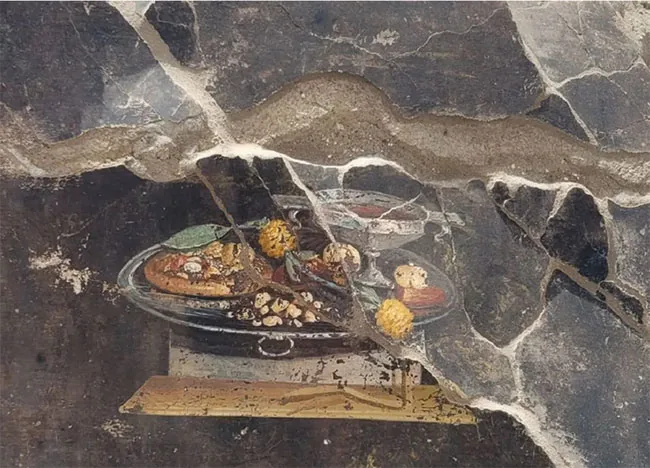
Paintings on food-shop walls could make a business visible, inviting, or memorable. Images of animals may connect with food sold nearby, but not every picture is a literal menu. Their meaning depends on the shop, the surrounding decoration, and the physical evidence recovered with them.
A painted duck feels like a clear promise of duck on a plate. That may be part of the story, yet a picture can do more than announce an ingredient.
Today, a restaurant may put a cheerful animal on its sign without selling every dish suggested by the picture. Branding and decoration can overlap with a menu without matching it exactly.
Pompeii asks us to keep that range of uses in mind. The wall is part of the evidence, not a key that unlocks every meal.
Color Made an Ordinary Shop Stand Out
The surviving paint also changes how we see the ancient street. The city was not a world of plain white stone and quiet brown ruins.
Buildings carried color. Signs, painted scenes, and written messages gave streets a busy visual life.
At a food counter, that color could matter in a crowded market for attention. A customer had to notice a business before choosing to buy from it.
What the Eruption Preserved, and What It Destroyed
The Vesuvius eruption in AD 79 buried Pompeii and helped preserve parts of its built environment. That preservation is uneven. Heat, collapse, later disturbance, and early excavation all changed the evidence, so a shop cannot be treated as a perfectly sealed snapshot of one ordinary afternoon.
The most haunting part of Pompeii is how near a last moment can seem. A counter remains where a person once stood, and a vessel sits where hands once reached for it.
But the city’s end was not a gentle pause. Falling debris, ash, and dangerous hot flows changed streets and rooms as the disaster unfolded.
A shop could contain material from daily use, cleanup, storage, and damage. Understanding those layers matters as much as identifying an attractive object.
Early excavators also shaped what we see. They did not always record small food scraps with the methods used today.
How to Look at a Counter Without Inventing a Customer
When you see a restored food stall, ask three plain questions. What survives, how do we know its date, and what does it really prove?
That approach leaves plenty of room for wonder. It lets a jar be a jar before we imagine what filled it, and a painted bird be a clue before we call it a dish.
The strongest scene is also the simplest. A person was hungry, another person sold food, and a street briefly became a place to eat.
Pompeii street food brings history down to that human scale. You do not need a feast in a wealthy house to feel the past; sometimes a worn counter is enough.
Frequently Asked Questions
The best answers separate familiar comparisons from firm evidence. Pompeii’s food counters show that prepared meals mattered in the Roman city, but they do not preserve every recipe or customer. These questions explain what the shops can tell us and where modern labels need a little care.
Did Pompeii have restaurants like modern fast-food shops?
Pompeii had businesses selling prepared food and drink, including counter-based shops. They offered convenience, but their menus, service, and social role were not identical to modern fast-food restaurants.
Do the paintings show exactly what a thermopolium sold?
Some images may relate to food handled in a shop, but a painting alone does not prove the whole menu. Researchers compare decoration with bones, residue, vessels, and the shop’s layout.
Did everyone in Pompeii eat at home?
No, food shops formed part of the city’s everyday economy. A person’s housing, work, wealth, and daily plans could all affect whether buying a prepared meal made sense.