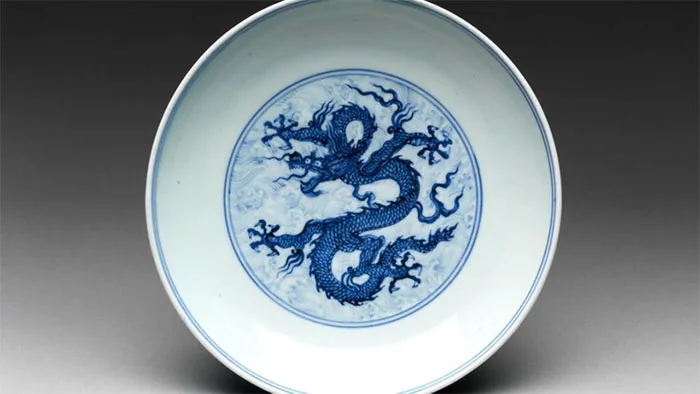
A huge bone rises from the earth, but the creature that carried it is gone. Without a science of deep time, the finder has to place that bone within a world of living animals, stories, and beliefs.
A dragon may offer one answer. The idea can give an unfamiliar shape a name, turning a fragment of a lost animal into part of a living tradition.
Dragon myths and fossils meet in this space between observation and interpretation. Their connection is real in some settings and only proposed in others.
The mistake is to make one bone explain every dragon. Different cultures built different creatures, and a story can grow from weather, power, art, and ordinary animals as well as from the things people dug from the ground.
A Fossil Needs an Explanation Before It Has a Name
Ancient communities encountered bones and other fossils long before paleontology. Some finds were interpreted through existing stories about giants or powerful creatures. These connections show how people made sense of unfamiliar remains, but a proposed influence on a myth requires evidence rather than a resemblance noticed by an observer.
Ancient fossil finds could be difficult to classify. A large tooth or a strange jaw might not match anything a person had seen alive.
The object still demanded attention. Its size and shape suggested a body, while the missing body left room for a story.
A community’s existing ideas could help fill that room. The same find might receive a different name in a place with different beliefs.
A Fragment Is Easier to Reimagine Than a Whole Skeleton
One bone provides fewer constraints than a connected skeleton. A horn, jaw, or limb can seem to belong to several imagined forms.
Even a collection of bones can mislead if they are assembled without a clear method. Position and context matter as much as the shape of a piece.
Modern paleontology adds comparisons, geology, anatomy, and dating to the task. Those tools were not available in the same form to earlier observers.
That difference does not make the observers incapable of curiosity. It shows that curiosity works with the explanations a culture knows how to use.
Dragon Bones Have a Specific History in China
Dragon bones is a traditional name applied to fossil material and other ancient finds in Chinese contexts. Their use connects real objects with cultural beliefs, medicine, and collecting. It doesn’t show that every Chinese dragon image arose from one dinosaur skeleton or one shared anatomical mistake.
Chinese dragons often carry meanings connected with water, power, and good fortune. Their role can differ sharply from the destructive creature in a European knight’s tale.
That difference matters before any fossil explanation begins. We are not studying one universal monster that merely acquired local colors.
Bones found in the earth can join an existing tradition rather than create it from nothing. A name may express a cultural category, not a literal anatomical claim.
A Traditional Name Is Not a Scientific Identification
Calling a find a dragon bone does not reveal which extinct animal produced it. The physical material must be examined separately.
Different kinds of remains can enter the same broad category. Their age and biological origin may vary even when people use a shared name.
The history therefore has two layers. One concerns the object’s natural origin; the other concerns what people believed it was and how they used it.
Keeping both layers gives the object a richer story. It lets the fossil be evidence of an ancient animal and evidence of later human interpretation at the same time.
European Dragons Followed Another Set of Stories
European dragons often appear in tales of danger, heroic combat, religion, or authority. Their forms drew on varied animals and artistic traditions over time. Fossils may have influenced some local accounts, but the history cannot be reduced to one prehistoric creature mistaken for a winged, fire-breathing beast across a continent.
A serpent already offers a powerful shape for a story. Add wings, claws, or a larger body, and the creature can cross boundaries that ordinary animals cannot.
European dragons could represent an obstacle to be overcome. Their danger helped define the courage or spiritual role of a person facing them.
Those meanings do not require a fossil to function. A story can use an imagined animal to make a moral or political idea visible.
Art Can Stabilize a Creature That Nature Never Made
Once artists repeat a form, it becomes easier for later viewers to recognize. A dragon’s appearance can feel traditional even when the tradition includes many changes.
Images then shape the stories told around them. A writer may describe a creature that already exists in paintings, carvings, or decorated objects.
That process helps explain why dragon forms become familiar. It does not show that someone once observed a living animal with every feature in the picture.
Mythical creatures have histories of their own. Their shapes can be inherited, adapted, and combined without following the biological history of a species.
The Griffin-Fossil Proposal Shows Why Testing Matters
A proposed link between griffins and dinosaur fossils remains debated. Visual resemblance can suggest a question, but proof also needs matching geography, dates, and evidence that people encountered and interpreted the remains. Without that human connection, a persuasive comparison remains a hypothesis rather than established history.
The griffin hypothesis is useful as a case study because it asks a concrete historical question. Could certain fossils have influenced a particular creature’s description?
That question can be investigated. Researchers can compare where remains were available with where stories developed, and ask whether the dates fit.
They can also examine whether the supposed resemblance depends on selective features. A beak and four legs may catch the eye while other anatomy complicates the comparison.
A Beautiful Theory Can Still Be Weakly Supported
An explanation can be elegant and memorable without being firmly established. Its appeal should encourage careful testing, not replace the test.
The same standard belongs in dragon history. A striking illustration of a dinosaur beside a dragon can suggest a question but cannot supply the missing human link.
We need evidence that people encountered and interpreted the remains in the proposed way. Without that evidence, the idea should remain a hypothesis.
That restraint does not spoil the study. It makes room for a stronger answer if new material appears, rather than letting a popular image close the question too soon.
The Best Story Keeps Nature and Culture Together
Fossils can influence stories, while stories can influence how fossils are named and valued. Each connection needs study of a particular place, object, and tradition. This preserves both natural history and cultural imagination, without claiming that every mythical creature is simply a mistake about an extinct animal.
A dragon can survive as a symbol long after people reject its literal existence. It may belong to a festival, a national image, a family story, or a work of art.
A fossil can also survive as an object with more than one meaning. Its natural history does not erase the ways later people collected or understood it.
The two stories can enrich each other. The bone opens a world before humans, while the name opens a world of human thought.
Look for the Link, Not Just the Match
Dragon myths and fossils make an inviting pair because both contain traces of something larger than the visible object. The pair still needs careful handling.
A match in shape is the start of a question. A historical link requires evidence of contact, interpretation, and transmission.
When that link is found, it shows people thinking with the material world around them. When it is not found, the myth remains worth studying on its own terms.
The earth holds lost animals, and culture holds imagined ones. Wonder grows when we learn how to tell their histories apart without refusing to notice where they meet.
Frequently Asked Questions
A fossil explanation can be useful without accounting for every dragon tradition. These questions distinguish documented use of ancient remains from broad origin claims. They also explain why a match in shape begins an investigation, while historical contact and interpretation are needed to make the connection convincing.
Did dinosaur fossils create all dragon myths?
No evidence supports one fossil origin for every dragon tradition. Some remains influenced particular beliefs, while other dragon stories developed through animals, symbols, and cultural imagination.
Were dragon bones always dinosaur bones?
No, a traditional category can include different kinds of ancient material. Scientific identification requires examination of the object rather than reliance on its historical name.
Is the griffin-fossil connection a settled fact?
No, it is a debated hypothesis. A strong case needs more than visual similarity, including evidence about location, timing, and how the idea reached the people telling the stories.