The boat was gone, but the ship was still afloat. Somewhere in the Atlantic, ten people had chosen a small craft over the vessel that had carried them from New York. None returned to explain that choice.
That is the hard center of the Mary Celeste disappearance. It is not a tale about a ship that vanished. It is a tale about people who left a ship, followed by a silence that no surviving witness could break.
The famous name invites ghost stories. The real puzzle asks a far more human question. What danger would make a captain move his wife, young daughter, and crew into an open boat at sea?
The quiet ship and the people who were missing
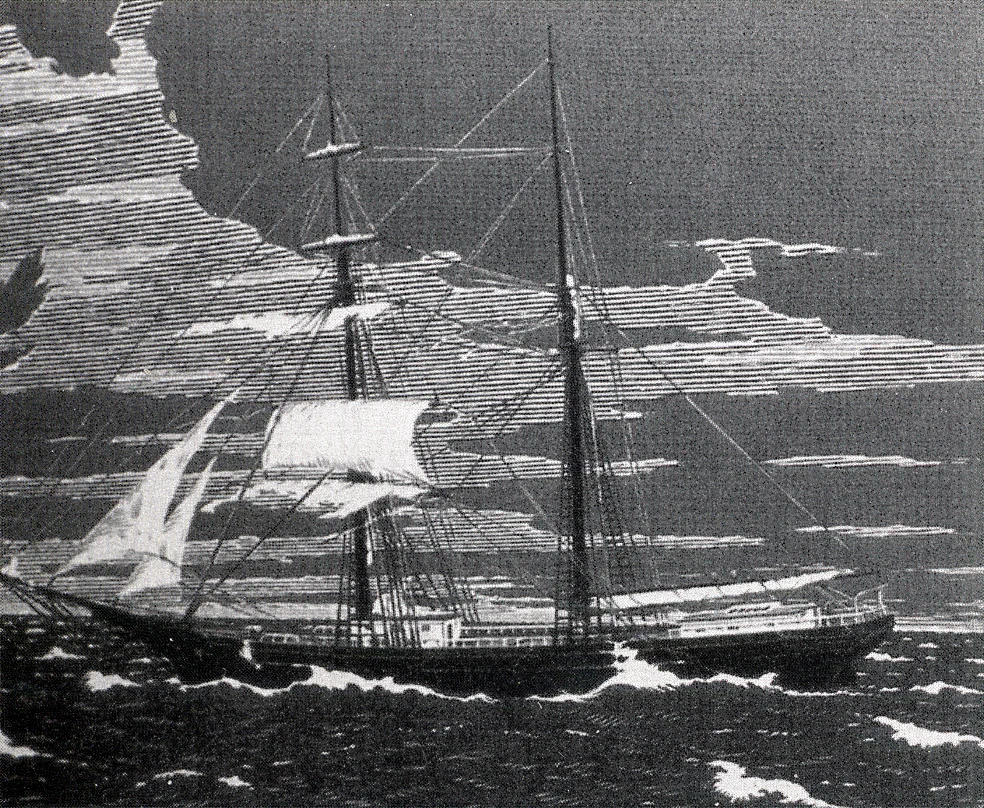
The Mary Celeste was found empty near the Azores in December 1872. Its captain, his family, and seven crew members were gone, as was the ship’s boat. The ship stayed afloat, and that gap between the lost people and their sound vessel is the main puzzle.
Royal Museums Greenwich dates the discovery to December 4. Sailors from the Dei Gratia saw a vessel on a strange course, then went aboard when no one answered their calls.
Captain Benjamin Briggs had sailed from New York in November, bound for Genoa. His wife, Sarah, and their two-year-old daughter, Sophia, were among the ten people aboard.
These were real lives, not props in a spooky story. The captain had work to complete, a family to protect, and a crew whose safety depended on his choices.
The Mary Celeste ghost ship label can blur that fact. A deserted vessel may look haunting, but the label adds no clues about what happened to the people.
Why the missing boat matters so much
The missing lifeboat hints that the people left the ship by boat. It cannot tell us why they left, if they planned to come back, or what happened next. The absent boat is a strong clue to their choice, but it does not explain that choice.
A small boat can serve several roles. It can carry people ashore, inspect a problem from outside, or offer an escape from a danger inside a larger vessel.
Here, the distance from land changes the stakes. Leaving a working ship for a small craft in the Atlantic would involve a serious trade in shelter, space, and supplies.
But that trade must be judged from the captain's view at the time. People act on what they believe is happening, not on what a later search party will find.
A decision can be reasonable and still end badly
Suppose a person smells smoke in a building, hears a crash, and leaves. If the building remains standing, that does not prove there was never a reason to flee.
This is an analogy, not an account of events aboard the Mary Celeste. Its purpose is to show why an intact ship does not rule out a frightening short-lived emergency.
The missing lifeboat also leaves a second puzzle. Even if the choice to leave was sensible, the later loss of a small boat could take the lives of the people who understood the danger.
Cargo, fear, and the gap between possible and proven
The ship held about 1,700 barrels of alcohol, so concern about fumes is worth testing. Yet a risk is not proof that a blast took place. A sound theory must link the cargo to the choice to leave, without making up what the crew saw or heard.
The alcohol cargo is one reason researchers have explored an explosion or a fear of explosion. Royal Museums Greenwich includes that idea among the proposed accounts, while stating that the case remains unsolved.
A dangerous cargo can affect judgment even when the danger leaves little obvious damage. Yet the mere presence of such cargo cannot show that it caused the choice to leave.
Ask what each theory actually explains
A good theory should do more than offer a striking trigger. It should explain why everyone left, why the boat went with them, and why the ship remained afloat.
It should also say which parts are supported and which are guesses. If a story needs an unseen spark, an unknown argument, and a vanished rope to work, those missing parts must stay visible to the reader.
For readers, the key habit is simple: pause whenever an account moves from what was found to what someone must have felt or done.
How a real disaster became a ghost story
Fiction and poor reporting helped turn the empty vessel into a ghost story. Arthur Conan Doyle wrote a tale that changed facts, even the ship’s name. Those changes still appear in later accounts, so we must check where a detail came from before treating it as true.
Doyle's tale used the name Marie Celeste. The actual vessel was Mary Celeste, a small difference that shows how easily invented details can travel with real ones.
Royal Museums Greenwich also describes the claims made by Gibraltar's attorney general, Frederick Solly-Flood. He favored foul play even as evidence against that view grew.
This is a warning about anchoring. Once a person takes up a strong account, later facts may be bent to fit it instead of being used to test it.
The abandoned ship mystery offered fertile ground for that habit. An empty ship supplies a striking image, while the absent people cannot correct a false account.
Why the most striking version often wins
A careful sentence ends with doubt. A ghost story ends with a scene you can picture, and pictures are easier to remember than limits on knowledge.
Over time, readers may remember the scene but lose the warning that it came from made-up tales. A made-up detail can then appear to confirm another made-up detail.
There is also a moral cost. Wild claims of guilt can turn a missing sailor into a bad person without giving that person a chance to answer.
The better story keeps the human stakes without inventing human guilt. The sea was dangerous enough, and the silence afterward was painful enough, without adding monsters.
A mystery does not become less powerful when its claims become more careful. Often, it becomes more moving.
What would count as a real solution?
A sound answer would link three things: the choice to leave, the boat, and the fate of all ten people. A theory that fits one clue is not enough. Until new facts bridge those gaps, the best account keeps what we know apart from what we guess.
The Mary Celeste began life as the Amazon, built at Spencer's Island in Nova Scotia in 1861. That normal beginning is a useful reminder that its fame came from one voyage, not a lifetime of strange events.
To test future claims, begin with the source. Does it cite an old document, name an object, or simply repeat a tale that has appeared in many books?
Then examine the sequence. Does the claim explain the first alarm separately from the later loss, or does it skip the difficult middle of the story?
Finally, ask about other options. Could the same clue fit a different set of events, and does the proposed answer allow for that option?
The absence of an answer is hard to accept. Yet forcing a final answer can destroy the clear line that makes history useful: the line between something that happened and something that could have happened.
Picture that empty deck once more, with the Atlantic moving around it. The ship returned to the record, but the people did not.
Their story deserves both curiosity and care. The unanswered question is strong because it belongs to a real family and a real crew, not because a legend needs another eerie ending.
Good maritime evidence needs a clear source and a date. A claim copied across many books is still only one claim if all those books draw from the same tale.
Frequently Asked Questions
These questions focus on three parts of the case: whether the ship vanished, what the absent boat means, and whether an answer has been proved. Short replies help clear up the puzzle, but they cannot give us the words of the people who left the ship.
Did the Mary Celeste itself disappear?
No. The ship was found deserted in the Atlantic in December 1872. The unsolved loss concerns its ten people, rather than a vessel that vanished without trace.
Does the missing lifeboat prove the crew abandoned ship?
It strongly suggests that the people left by boat, but it does not reveal the reason or the later outcome. The decision to leave and the disappearance afterward remain separate questions.
Has the Mary Celeste disappearance been solved?
No accepted solution shows the complete sequence. Cargo danger and other emergency scenarios remain options, while claims about ghosts lack sound evidence.