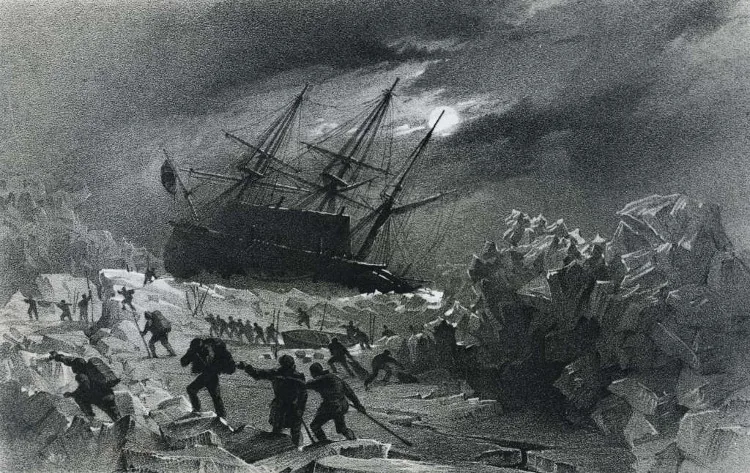
The ships were designed to reach a new route through the Arctic. Instead, they became missing objects in a landscape that could hold wood, metal, and human stories for generations.
The Franklin expedition mystery began with a voyage in 1845 and grew through years of searching. HMS Erebus and HMS Terror sailed with men, supplies, and confidence, but none of the expedition’s members returned to tell the full story.
The wrecks have now been found. That discovery did not erase every question about what happened between departure and the crew’s final attempts to escape.
The most important change is that the mystery has more than one kind of witness. Written notes, bones, ship remains, and Inuit knowledge belong in the same conversation.
Two Ships Entered a Dangerous Route
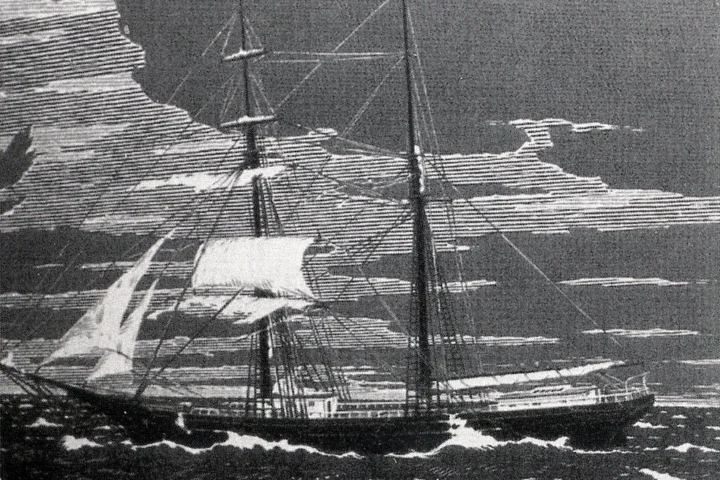
Franklin sailed toward the Northwest Passage in 1845 with Erebus and Terror. Ice trapped the ships, and a worsening emergency led to abandonment. Equipment and stores offered protection without guaranteeing safety, as the crew faced changing conditions that narrowed its choices and made escape progressively harder to organize.
The Northwest Passage promised a sea route through the northern reaches of North America. On a map, the idea can look like a line waiting to be completed.
On the water, ice could close that line. A ship might enter a place under one set of conditions and find its route altered later.
The expedition’s ships carried technology and supplies meant to support a long voyage. Their strength still depended on circumstances that people could not fully control.
Confidence Was Not the Same as Knowledge
A prepared crew can still meet a setting it misunderstands. The Arctic forced choices about movement, shelter, food, and the timing of any attempt to leave.
Those choices became harder when a ship no longer offered a way forward. Its stores could sustain people for a time while the ice prevented a solution.
The tragedy should not be reduced to a claim that the men were foolish. It is a story about preparation meeting limits, and about a system that became more dangerous as options narrowed.
The ships were tools for a voyage, not a promise that the environment would remain manageable.
A Short Note Carries a Large Burden
The Victory Point note is one of the key written records left by the expedition. Its addition reports Franklin’s death and the abandonment of the ships in 1848. The note supplies dates and intentions, but it is brief, so it cannot explain every illness, decision, or movement of the men.
The Victory Point note gives the story a rare fixed point. A reader can see the effort to record a change in circumstances rather than infer everything from remains.
Its brevity also makes it easy to ask too much of it. A few lines cannot become a diary for every member of a large expedition.
The record tells us what was written at that moment. Later events require other forms of evidence.
An Intention Is Not a Completed Journey
A planned route shows what people hoped to do. It does not prove that every survivor followed it or reached the intended place.
Conditions could force changes after a note was left. Illness, supplies, terrain, and the movement of ice could all affect what came next.
That distinction matters when reconstructing a lost expedition. A statement of purpose and a set of later remains need to be brought together without making one erase the other.
The written note is powerful because it is specific. Its value grows when its limits are treated as part of the evidence rather than as an inconvenience.
Inuit Knowledge Was Not a Footnote to the Search
Inuit accounts preserved knowledge of ships and people in a landscape outsiders understood less well. That information mattered to research and the wreck searches, despite earlier dismissal by some visitors. Local knowledge deserves contextual investigation as evidence, rather than being treated as decoration around a story centered only on Europeans.
Inuit oral history belongs to people who knew the landscape through life within it. Their information could reflect observation, memory, and knowledge passed between generations.
A visiting searcher had different tools and a different experience of the region. Those differences should encourage comparison, not an automatic ranking that treats one form of knowledge as worthless.
The search history contains examples of outsiders dismissing reports that later proved important. That is a lesson about whose voices a research project is prepared to hear.
Evidence Can Be Preserved in Several Forms
A written note can survive on paper. A place name, an account of a ship, or a memory of people arriving can survive through a community.
Each form needs careful interpretation. Neither should be accepted without context or rejected because it is not stored in the familiar way.
The Franklin story becomes more accurate when the local record is allowed to shape the questions. It is not merely a story of explorers and later scientists arriving to explain an empty land.
The land was not empty, and its knowledge was not waiting to begin when the expedition entered it.
Finding the Wrecks Added Evidence, Not a Complete Ending
HMS Erebus was located in 2014 and HMS Terror in 2016. Their positions and structures gave researchers physical evidence of the expedition’s fate. Underwater investigation can examine the ships and objects within them, while conservation and the conditions of the sites limit how quickly material can be recovered and interpreted.
A wreck can answer a question that decades of searching could not. It can show where a ship finally came to rest and preserve details of its last condition.
It cannot automatically reveal every event before sinking. A vessel’s movement may reflect human action, ice, water, or several stages of change.
HMS Terror‘s survival beneath Arctic waters is striking partly because people had imagined destruction without the wreck itself to inspect. The physical find gives that discussion new constraints.
A Ship Is an Archaeological Site
Arctic archaeology asks researchers to protect context. An object in a cabin, a fitting on a deck, and the position of debris can all matter to the interpretation.
Recovery is therefore not a race to remove the most attractive pieces. Some evidence is best studied where it lies, and anything raised from the water may need long conservation work.
The discoveries also belong to a wider partnership with Inuit communities and the management of the sites. The wrecks are not simply objects for outsiders to claim.
Their value comes from how carefully they are studied and how responsibly their story is shared.
The Final Loss Was More Complex Than One Poison
Cold, hunger, disease, nutritional problems, and lead exposure have all entered research on the expedition. A trace of one factor doesn’t explain every death. Researchers must assess samples and timing together, because interacting pressures can weaken people in ways a single-poison story cannot capture across the whole disaster.
The lead-poisoning story is memorable because it offers a hidden danger in the supplies. It also risks making a complex collapse sound like one solved medical case.
People can face several threats at once. A weakened body may have less ability to travel, withstand cold, or recover from illness.
The available remains do not represent every person equally. Samples, dates, and comparison groups matter when researchers decide what a result can show.
A More Complete Story Still Has Gaps
The Franklin expedition mystery now contains more physical evidence than it once did. That is a major advance, even if it does not supply a neat final scene.
A note records a decision, a wreck records a resting place, and a community preserves knowledge of a landscape. None should be forced to carry every missing answer.
The men who died remain part of a tragedy, but they are not the only human presence in the story. Searchers, descendants, and Inuit communities have also shaped how the past is recovered.
The ice kept evidence. Understanding it requires listening to more than the loudest or most familiar voice.
Frequently Asked Questions
The discovery of both wrecks changed the investigation, but it did not provide one simple cause for the expedition’s loss. These answers clarify what has been found, why local knowledge matters, and how researchers assess claims about poisoning without reducing a long Arctic emergency to one explanation for every death.
Have both Franklin expedition ships been found?
Yes, HMS Erebus was found in 2014 and HMS Terror in 2016. Their wrecks provide physical evidence that continues to be studied with care.
Did lead poisoning kill the entire expedition?
Lead exposure is one factor researchers have investigated, but it does not explain every death by itself. Hunger, cold, disease, and other pressures also require consideration.
Why was Inuit oral history important?
Inuit accounts preserved information about the ships, people, and region. That knowledge helped guide understanding and searches, challenging earlier habits of dismissing local evidence.