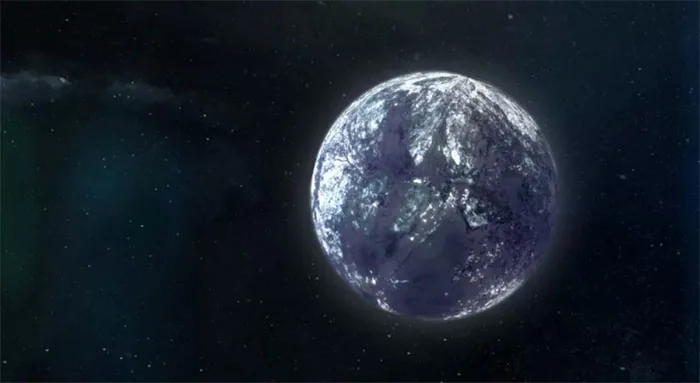
A planet can travel through space without a star to circle. There is no nearby sun rising over its horizon, no familiar year marked by a steady trip around a bright central light.
Such objects are often called rogue planets. The name sounds rebellious, but the worlds are not choosing to leave; gravity and formation history shape their paths.
Rogue planets explained begins with a useful distinction. A planet-like object can exist alone even though most familiar planets belong to a system like ours.
The challenge is finding it. A dark world can be difficult to see directly, so astronomers sometimes rely on what its gravity does to light from something much farther away.
A Planet Can Exist Without Orbiting a Star
Free-floating planets are planetary-mass objects not bound to a host star in the usual way. Some may have been ejected, while other formation routes remain possible. Finding one alone doesn’t settle its origin, and uncertain mass or history can affect the terms astronomers use to classify it.
Free-floating planets change the simple picture many of us learn first. A star sits in the center, and planets follow paths around it.
That picture describes our system, but it does not define every small world in the galaxy. Space contains objects with a wider range of histories.
The word planet also carries technical debates when an object forms or lives outside a familiar system. Researchers may use planet-mass object when they want to be precise about what is measured.
A Name Should Not Hide What Is Unknown
An object can have a mass estimate while its origin remains unclear. Finding it alone does not tell us exactly how it became alone.
That distinction matters because a story about exile is more vivid than a story about several formation possibilities. The vivid account should not be assigned to every discovery.
Astronomers compare models and observations to narrow the options. A population of objects may contain more than one route to its present state.
The variety is part of the science. It makes the galaxy less tidy than a school diagram and more interesting to investigate.
Gravity Can Throw a World Out of a System
Gravitational encounters can change a planet’s orbit and sometimes eject it from a system. Interactions with other stars may also matter. This is a plausible formation route for free-floating worlds, but isolation alone doesn’t show which event occurred or prove that every such object once orbited a star.
A young system can contain bodies moving through changing relationships. Gravity pulls each one according to the others, and a small change can lead to a large difference over time.
Some encounters shift an orbit. Planet ejection can give a body enough energy to leave the system that once held it.
The event need not resemble a collision in a film. Gravity can change a path without two surfaces touching.
Leaving Does Not Mean Flying Toward Earth
A story about an ejected planet can quickly become a story about a threat to our own world. The galaxy is vast, and the existence of such objects does not establish an imminent encounter.
A risk claim needs an orbit, distance, and evidence of a relevant approach. It cannot be built from the general fact that interstellar worlds exist.
That is an important boundary for popular science. A fascinating category of object does not automatically become a disaster forecast.
The real questions are already large enough: how often ejection occurs, what kinds of worlds survive it, and what their numbers tell us about planet formation.
Microlensing Lets a Dark Object Reveal Itself
Microlensing detects an object’s gravity through temporary magnification of a background source. That can reveal a world too faint to photograph directly. The event’s shape and duration need modeling, because motion, distance, and alignment affect the mass inferred from the signal and limit what one observation can establish.
Gravitational microlensing uses light that does not come from the planet itself. The world acts as a lens for something behind it.
The alignment can last only a short time. Observers need to notice the change and record its shape before the opportunity passes.
A smaller mass can produce a briefer event under suitable conditions. But time alone is not a perfect scale, because movement and distance also enter the result.
A Detection Can Be Brief and Still Valuable
An object that never appears as a clear dot can still leave measurable evidence. That is one of astronomy’s most powerful ideas.
The method does not grant a full photograph of the surface. It may establish a lensing event and support an estimate while leaving many physical details unknown.
Follow-up and additional observations can help. Different perspectives may reduce uncertainties that one record cannot remove by itself.
A microlensing result is therefore both a discovery and a set of limits. The exciting part becomes clearer when those limits are described alongside the signal.
A Starless World Is Not Necessarily Frozen Throughout
A world without sunlight can retain internal heat, and an atmosphere may slow energy loss. Models explore possible warm regions or water beneath ice under certain conditions. Those possibilities are not detections of oceans or life on a known rogue planet, whose actual environment needs further evidence.
The absence of sunlight changes a world’s energy balance. It does not make the interior of every object instantly cold.
Heat from formation and internal processes can remain. How long it lasts depends on the object’s size, material, and history.
An atmosphere can also change how heat moves outward. A model may explore whether particular conditions could protect a warmer region.
A Possibility Is Not a Found Ocean
A hypothetical ocean can be useful in a model. It helps researchers ask which combinations of pressure, heat, and material might allow liquid water.
The model is not evidence that an observed object actually has those conditions. A separate chain of observations would be needed to establish them.
The same care belongs in discussions of life. A potential source of energy is not a detected organism or a confirmed ecosystem.
The possibility remains interesting without being promoted to a discovery. It widens the questions astronomers can ask about environments beyond the familiar zone around a star.
New Surveys Can Test How Common These Worlds Are
Surveys including planned Roman telescope work aim to enlarge the sample of free-floating objects. More detections can test abundance estimates and formation models. Predictions remain dependent on data and assumptions, so an estimated galactic population should not be presented as a complete count of worlds already observed.
The Roman Space Telescope is designed to support studies that include gravitational microlensing. Its surveys can build a more systematic record than a collection of isolated discoveries.
More events can show whether certain masses or timescales are common. They can also reveal where an earlier estimate depended too strongly on a small sample.
Planet formation becomes easier to study when the outcomes are counted carefully. A model that predicts many expelled worlds should face observations capable of testing that expectation.
The Dark Population Makes the Galaxy Larger in Our Minds
Rogue planets explained is not only about a strange exception to the solar system. It is about how a method can expose a population that ordinary photographs may miss.
A dark object can have a history, a structure, and a place in the galaxy without a bright star announcing it. Gravity gives researchers another route toward that world.
The result changes our mental map of space. Systems with suns are not the only places where planetary-mass bodies can exist.
Somewhere between visible stars, a world may move without a sunrise. The scientific task is to find its evidence, then resist imagining more of its life than that evidence can show.
Frequently Asked Questions
These worlds attract both wonder and exaggerated danger claims. Detection, origin, temperature, and path are distinct questions to study. These answers explain the role of lensing, the limits of a starless label, and why the existence of rogue planets is not an immediate threat report.
How can astronomers find a planet that emits little light?
Microlensing can reveal its gravity through a temporary change in a background star’s brightness. Other methods may detect some objects directly, depending on their heat, age, and distance.
Were all rogue planets thrown out of solar systems?
Ejection is one possible route, but formation histories can vary. An isolated planet-mass object does not reveal its full origin simply by being found without a host star.
Could a rogue planet be warm enough for life?
Models explore conditions involving internal heat and insulation, but that is not a detection of life. Any claim about a particular world’s environment would need much more evidence.