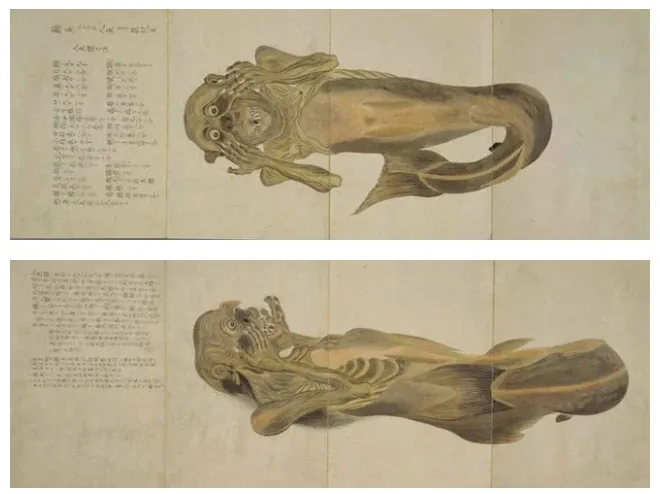
A face seems to rise from the water, then slips beneath a wave. For a tired sailor watching from a moving deck, the few visible details may be enough to turn an unfamiliar animal into a familiar human shape.
Mermaid myth origins include more than one mistaken sighting. Stories, religious ideas, art, trade, and deliberate fraud all helped build the creature we recognize today.
A manatee can explain some reports without explaining every sea legend. A fake specimen can explain one exhibit without proving that all people who told mermaid stories were trying to deceive.
The interesting history lies in those differences. The mermaid belongs to a meeting place between real animals and the stories people were prepared to see in them.
A Sea Creature Can Become Human at a Distance
Manatees, dugongs, seals, and other marine mammals have been proposed as sources of some mermaid reports. Distance, views, waves, and expectations can affect identification. That explanation is plausible for sightings, but it should not be treated as proof that every mermaid tradition began with the animal or one identical mistake.
Manatee sightings are striking because the animal can appear gentle and strange at once. Its body belongs to the water, yet some movements may seem familiar to a human observer.
A dugong presents another possible source in parts of the world where it lives. An explanation must fit the location as well as the shape.
If the proposed animal did not live near the reported sighting, the story needs more work. A resemblance alone is not a complete historical account.
A Short View Leaves Room for the Mind
The deck is moving, light is changing, and the animal may show only part of its body. Those conditions limit what the observer can know.
People still try to complete the picture. A few features can be joined into a form that feels more certain than the view really was.
That does not require a dishonest witness. An honest report can preserve a genuine experience while misidentifying its cause.
The distinction matters because sea legends often survive as either unquestioned testimony or a joke about foolish sailors. Neither extreme gives much attention to the difficult act of seeing something briefly at sea.
The Story Was Larger Than a Natural History Error
Mermaid traditions express varied ideas about the sea, danger, beauty, desire, and beings between human and animal worlds. Cultures developed distinct forms and meanings. Natural sightings may have contributed to some stories, but the tradition cannot be reduced to one biological mistake that spread unchanged across every place and period.
Dugong folklore and mermaid stories belong to specific communities. Their meaning depends on the surrounding stories and the way people understand a coast or sea.
A creature might warn of danger in one setting and represent beauty in another. Those roles can change as artists and writers carry a story into new forms.
The familiar image of a woman with a fish tail is therefore only one part of a broad tradition. Its apparent simplicity hides a long history of choices.
Stories Travel, but They Also Change
A tale carried along a trade route does not necessarily remain the same tale. Listeners connect it with local animals, beliefs, and fears.
Images can also influence later descriptions. Once a recognizable mermaid shape appears in art, people have a form against which to compare an uncertain sighting.
That creates a loop between observation and expectation. A story helps someone name a shape, and the named shape becomes another story.
The result is not merely bad biology. It is a cultural life that can continue even after people no longer believe the creature exists as a real animal.
Manufactured Mermaids Turned Curiosity Into a Business
Artificial mermaid specimens converted curiosity into a paid spectacle. Makers assembled or shaped materials to suggest a creature between human and fish, as in the Feejee mermaid tradition. Each object needs examination, because a familiar label doesn’t establish one identical construction method for every example in the tradition.
The Feejee mermaid was not the graceful figure of a modern animated film. The famous type of specimen looked dried, unsettling, and difficult to classify at a glance.
That appearance could help the display. A strange object feels like evidence simply because it can be pointed at.
A visitor might accept the claim before asking how the material was joined or whether the creature’s anatomy made sense. The exhibit turned uncertainty into a reason to buy a ticket.
An Object Is Not Its Label
A museum or show can place a confident name beside an item. The name still needs support from the item itself.
Modern imaging and material analysis can help examine old specimens without relying only on their surface. What looks like a body may contain assembled parts, modeled structures, or other unexpected materials.
The exact result varies. It is safer to describe what a particular investigation found than to claim all fake mermaids were made with the same simple recipe.
Marine mammals did not create these exhibits. People did, responding to a market for wonders and the appeal of a creature that seemed too strange to be dismissed without a closer look.
A Convincing Claim Needs Biological Evidence
There is no verified scientific evidence establishing mermaids as real human-fish creatures. A claim would need reliable material, provenance, repeatable examination, and anatomy consistent with a living organism. A blurry video, a confident witness, or an old display label doesn’t provide that level of support, however memorable it may be.
Sailor stories can be valuable historical records. They tell us what people reported, feared, or believed during a voyage.
Their value does not automatically establish the animal described. A report and a biological specimen answer different questions.
A modern video has similar limits. It may show a real shape while leaving scale, distance, lighting, and editing unresolved.
The Right Questions Are Plain Ones
Where was the evidence collected? Who handled it, and can other people examine it under clear conditions?
Does the object preserve the structures expected of a body? Does the claim fit what is known about the place and the materials?
These questions do not make a story dull. They provide a way to move from a striking image toward an answer.
They also protect genuine discoveries. A new species is more convincing when it can be described and checked than when its existence depends on a story that changes whenever someone asks for clearer evidence.
The Real Animals Deserve Attention of Their Own
Manatees and dugongs offer real natural histories behind some mermaid comparisons. Their lives, habitats, and conservation needs matter without a mythical identity. Studying those animals prevents a legend from replacing the distinct biology of creatures that may have inspired certain reports under difficult conditions at sea.
A manatee does not have to look like a person to deserve care. Its slow movements and life in coastal waters are interesting on their own terms.
Dugongs rely on habitats and food that can be affected by human activity. Their survival is a practical question, not an unresolved legend.
That shift in attention is one reward of studying mermaid myth origins. The story can lead us toward the sea rather than leaving us fixed on an imaginary body.
Keep the Wonder Without the False Claim
A folktale can hold meaning after its literal creature has lost credibility. Art and story are not required to pass the same test as a biological discovery.
The trouble begins when a story is presented as scientific proof. Then the evidence must meet the standards of that claim.
We can enjoy the mermaid and still distinguish a marine mammal, a manufactured specimen, and a cultural symbol. Each has a history worth understanding.
The sea becomes more interesting with those distinctions, not less. It holds real lives, difficult sightings, and stories that reveal as much about the watcher as the water.
Frequently Asked Questions
Mermaid history contains observations, cultural stories, and deliberately manufactured objects. These questions keep those strands separate rather than forcing one animal to explain them all. They describe where marine mammals offer plausible comparisons and why an uncertain sighting or show specimen is not verified biological evidence of a mermaid.
Were mermaid sightings always manatees?
No, manatees are a plausible explanation for some reports in suitable locations. Other animals, viewing conditions, invented stories, and cultural traditions also belong in the wider discussion.
Was the Feejee mermaid a real animal?
The famous specimen tradition involved artificial objects presented as mermaids. Individual examples require examination to establish their exact materials and construction.
Have scientists found proof that mermaids exist?
No verified scientific evidence establishes a real human-fish creature. Stories and uncertain images are not substitutes for material that can be reliably examined and independently checked.