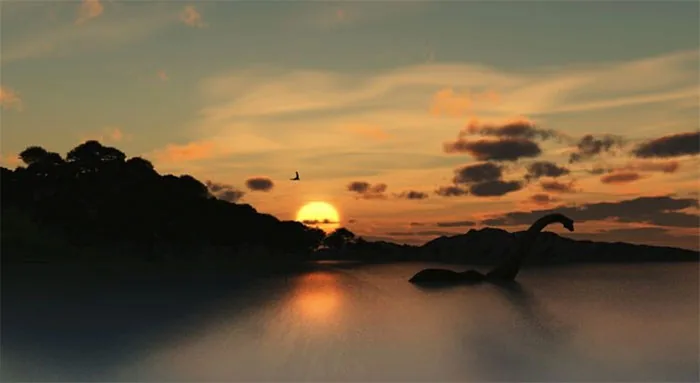
A lake can hold traces of an animal after the animal has moved away. Skin cells, waste, and other tiny remains can leave genetic material in the water, giving researchers a way to study life they never see directly.
That idea offered a new approach to a very old question at Loch Ness. Instead of waiting for a shape to break the surface, scientists collected water and asked what DNA it carried.
The Loch Ness DNA study did not photograph a monster or prove that a giant eel patrols the depths. It gave the legend a more testable setting.
The result is interesting because it shows what modern evidence can do and what it cannot. A sample can tell us a great deal without becoming a complete census of every living thing in a lake.
Environmental DNA Turns Water Into a Clue
Environmental DNA is genetic material released by organisms into their surroundings. Researchers can collect water, extract that material, and compare sequences with reference information. The method can detect species without catching or observing them, but results depend on sampling, DNA persistence, contamination control, and the quality of the comparison databases.
Environmental DNA is often shortened to eDNA. The idea is less mysterious than the name sounds: living things leave traces as they move through a place.
A fish does not need to remain beside the sample bottle. Material released earlier may still be available when the water is collected.
That makes the method useful for animals that are difficult to see or catch. It also creates questions about where a trace came from and how long it remained detectable.
Detection Is Not the Same as Seeing a Body
A DNA result can support the presence of a species. It usually does not show the size, behavior, or exact location of the individual that left the material.
Water moves and mixes. A trace found in one place may have traveled from another part of the lake.
Reference databases also matter. A sequence can be identified only as well as the available comparison and the method permit.
The technique is powerful because it adds evidence, not because it makes all other evidence unnecessary. Researchers still need to ask what the result actually measures.
The Study Tested Several Popular Monster Ideas
The 2019 study found no support for several proposed large-animal explanations of Nessie, including a surviving plesiosaur population. It detected abundant eel DNA, but that result established neither giant size nor a link to sightings. A genetic trace is not a measurement of an animal’s body.
Nessie sightings have generated a long list of possible animals. A surviving prehistoric reptile is one of the most famous ideas, while other suggestions involve large fish.
The study brought some of those ideas into a framework that could be tested. Instead of asking only whether a photograph looked convincing, it asked what traces the water contained.
Its findings gave no support to the familiar claim that a plesiosaur population lives in the lake. That is a narrower and more useful statement than declaring that science searched every corner and saw everything.
Eel DNA Was Not a Measurement of Giant Eels
The giant eel theory gained attention because eel DNA appeared in the samples. A reader can easily move from many traces to one huge animal.
The method did not justify that step. Abundant DNA does not become a ruler for the body that produced it.
Ordinary eels were already part of the lake’s known life. Their genetic traces therefore had a straightforward explanation.
A giant specimen would require additional evidence. The study did not find one, measure one, or establish that an unusually large eel explains the legend.
The Lake Gives Sightings a Difficult Setting
Loch Ness is large, deep, and dark, making brief surface observations difficult to interpret. Distance, waves, and light can alter an apparent shape. An honest witness can report a real experience while misidentifying its cause, so confidence alone doesn’t establish the animal described in a sighting.
A shape at a distance can look more definite than it is. The mind tries to organize a few visible features into a familiar object.
A wake, a swimming animal, or a floating item can become part of that process. A photograph may freeze the ambiguity instead of resolving it.
Scottish folklore adds another layer. People arrive at the lake already aware of a creature they might hope or fear to see.
Expectation Can Shape an Honest Report
Someone can describe an experience sincerely and still misidentify its cause. The claim does not have to be either a perfect observation or a deliberate lie.
That distinction keeps the discussion respectful. A witness’s confidence is evidence about the experience, not a guarantee that the interpretation is correct.
Monster evidence becomes stronger when details can be checked independently. Clear scale, location, duration, and repeated observation matter more than a dramatic description alone.
The setting invites wonder, but it also asks for caution. The lake’s beauty and depth do not make one extraordinary explanation more likely simply because ordinary shapes are hard to read.
A Negative DNA Result Has Limits
Failure to detect a species can weaken support for a claim, but the result has sampling limits. DNA persistence, the number of animals, timing, and test sensitivity all matter. Researchers assess those factors before deciding how strongly a negative finding speaks against a proposed lake population.
A sample is not the whole lake. It represents water collected in certain places at certain times.
That does not make a study too limited to be useful. Research often works by gathering a designed sample rather than trying to collect everything.
The important question is how well the design addresses the proposed claim. A large breeding population should raise different expectations from a hypothetical single passing animal.
Limits Should Not Become an Escape From Testing
A believer can use every limitation to move the creature beyond reach of evidence. If no possible result can count against a claim, the claim becomes hard to study scientifically.
A skeptic can make the opposite mistake by describing one study as perfect proof about every imaginable animal. That overstates the method too.
The productive position lies between them. The study provides meaningful evidence against several stories, while its design defines the boundaries of the conclusion.
Those boundaries do not restore every rejected idea to equal standing. A possibility that survives only as an untestable exception remains weakly supported.
The Real Lake Is Interesting Without a Monster
The study also revealed traces of ordinary life in the lake, offering a view of an ecosystem rather than only a monster test. Fish, plants, and microbes provide real questions for research. Nessie’s cultural importance can remain distinct from biological claims that the evidence doesn’t support.
Lake ecosystems hold questions that are less famous and no less real. Researchers can study which organisms are present, how conditions change, and how life is connected across the water.
eDNA adds a tool to that work. A method first introduced to readers through a monster headline can also help address ordinary conservation questions.
The lake therefore offers a second kind of wonder. It is a place full of life that can be studied without waiting for one legendary creature to make the rest meaningful.
Keep the Story and the Test Distinct
The Loch Ness DNA study does not decide what the legend means to everyone who visits. It addresses biological claims through a particular set of observations.
A community can treasure a story while a researcher asks what evidence supports an animal. Those are related but different activities.
The most satisfying result is not a forced victory for either side. It is a clearer understanding of what the water says and what people add to it.
Nessie keeps a place in culture. The lake’s actual life keeps a place in science, where even a small trace can open a large question.
Frequently Asked Questions
The findings are sometimes described as proof of a giant eel or as a perfect census of the lake. Neither description fits the method. These questions explain what DNA sampling detected, what it cannot measure, and why a meaningful negative result still needs clearly stated limits.
Did the study prove Nessie is a giant eel?
No, it detected eel DNA but did not measure the size of individual eels. A giant eel causing the reported sightings remains unproved.
Did researchers find plesiosaur DNA?
The study reported no evidence supporting the plesiosaur explanation. That result gives no support to the claim that such prehistoric reptiles form a hidden population in the lake.
Can DNA sampling miss an animal?
Detection depends on sampling and the amount, condition, and persistence of DNA. Those limits matter, but they do not make every unsupported monster claim equally plausible.