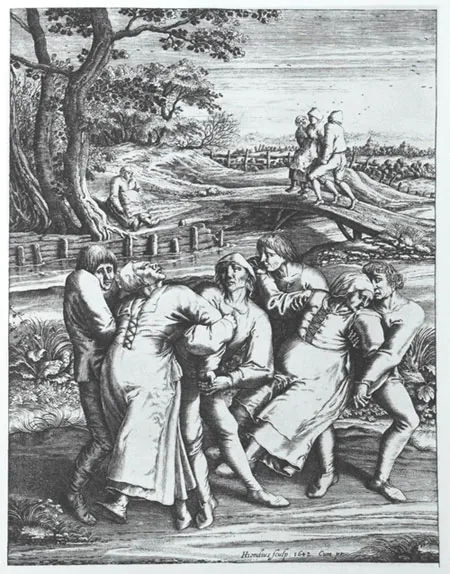
A crowd kept dancing when dancing no longer looked like pleasure. In Strasbourg in 1518, an outbreak of strange behavior drew people into motion that witnesses struggled to understand and authorities struggled to stop.
The dancing plague of 1518 sounds like a story invented to frighten children. It appears in historical records, though many details became less certain as the tale traveled through later retellings.
The unsettling question is not simply why people moved. It is why the movement spread, why normal attempts to help could fail, and how fear shaped the answers people accepted.
The story takes us into a city where belief, hardship, and medicine met. No surviving record lets us examine the dancers as a modern doctor could, so the strongest explanations must leave room for doubt.
A Real Outbreak Reached Us Through Uneven Records
Historical accounts describe a dancing outbreak in Strasbourg during the summer of 1518. The scale and course are discussed by researchers, and later versions often present disputed numbers as settled facts. The event is best studied through its surviving records, while recognizing that those records cannot provide a case history.
Strasbourg dancing mania did not arrive with a laboratory report. Observers wrote about what they saw through the language and ideas available to them.
That makes their accounts valuable and limited at the same time. A chronicler may preserve an event while leaving out the details a modern researcher most wants.
The number of people involved, the length of individual episodes, and reports of deaths need special care. Popular accounts can blend different reports into one smooth story.
A Famous Number Is Not Always a Firm Number
A total repeated in many books can feel proven even when those books share the same uncertain source. Repetition is not a new witness.
For the dancing outbreak, that problem matters. The image of hundreds of people moving at once is vivid, but a careful account must ask how the figure was obtained.
The same applies to claims about deaths each day. We should distinguish a reported outcome from a count documented in a way we can check.
The event remains disturbing without enlarging it. Uncertainty about a number does not erase the fear or the puzzle that the surviving evidence describes.
Belief Shaped What People Thought Was Happening
Religious beliefs, including ideas connected with Saint Vitus, shaped how people interpreted uncontrolled dancing. Those beliefs influenced fear and attempts at relief, without proving a supernatural cause. Understanding the setting helps explain the responses available to sufferers and officials confronted with behavior they couldn’t readily diagnose.
Saint Vitus belonged to a world where illness could carry spiritual meaning. A person might connect bodily distress with a saint, a curse, or a failure to meet a religious duty.
Those ideas were not decorations added after the fact. They could shape what people expected, how they responded, and where they sought help.
To a modern reader, the beliefs may seem distant. The human need beneath them is familiar: people wanted an explanation that could guide a useful action.
Meaning Can Affect Experience
Belief does not mean that someone is pretending. Expectations and fear can affect a body in ways that feel real and difficult to control.
That point matters when discussing historical epidemics of unusual behavior. Calling the sufferers foolish or dishonest explains very little.
Their lives held pressures that a neat summary cannot fully recover. Food shortages, disease, and social insecurity could make a community more fearful and more alert to signs of danger.
A cultural explanation can therefore help us understand the form of the distress. It still has to be tested against what the records say, rather than used to fill every gap.
More Dancing Was Not Necessarily the Cure
Officials responded through the medical and cultural ideas available to them, sometimes encouraging further dancing. Such measures may have reinforced rather than relieved the outbreak. The event shows how a treatment can appear reasonable within one framework while changing the conditions in ways that make the original problem worse.
Renaissance medicine did not work from modern knowledge of the nervous system. Officials faced an urgent event without the tests that might help distinguish possible causes today.
A response could aim to let people finish or discharge what was driving the movement. That made encouragement look like a form of help rather than cruelty.
The trouble was that a response could also make the behavior more visible. More attention, a public setting, and a recognized role for the dancers might deepen the social pattern.
An Intervention Can Become Part of the Event
A town does not stand outside an outbreak. Its actions change the setting in which people experience it.
If an official response brings musicians or gathers sufferers together, those choices can influence what happens next. They are not neutral background details.
This does not give us a complete explanation for every dancer. It gives us a reason to include the response in the story rather than treating it as separate.
The city tried to solve a problem it did not fully understand. That is a familiar challenge, even when the choices made five centuries ago look strange to us now.
The Ergot Theory Has Serious Limits
Ergot poisoning offers a concrete proposed cause, but its known effects don’t neatly explain prolonged organized dancing. A toxin must fit symptoms, timing, and spread rather than merely sound plausible. The theory remains debated because a physical mechanism is useful only when it accounts for the reported event.
The ergot theory is appealing because it offers a concrete cause. A fungus enters food, food enters bodies, and the mystery seems to acquire a clear mechanism.
But a mechanism must fit the event. A substance that causes spasms or other distress does not automatically explain why people performed a particular behavior for long periods.
The reported pattern also matters. Researchers need to ask who was affected, how cases appeared, and whether the proposed cause fits that timing.
A Physical Cause Is Not Stronger Just Because It Sounds Physical
It can feel more serious to name a poison than to discuss beliefs or social pressure. That feeling is not evidence.
Mass psychogenic illness is another framework scholars have explored. It considers how real symptoms can spread or take shape through shared expectations and distress, without requiring one toxin to explain every case.
That framework also has limits. We cannot travel back to interview the people, take samples, or test competing diagnoses in the usual way.
The honest answer is therefore not a triumphant label. It is a comparison of explanations, each measured against an incomplete historical record.
The Most Useful Lesson Is About Uncertainty
The outbreak illustrates how people respond when bodies behave in ways that shared knowledge cannot explain. Fear, authority, treatment, and storytelling all influence the record. A responsible account keeps those layers separate, allowing a leading interpretation without pretending that a diagnosis can be confirmed from distant and incomplete descriptions alone.
The dancing plague of 1518 survives because it unsettles a basic expectation. A person should be able to stop an ordinary action when it becomes painful or dangerous.
When that expectation fails, observers look for causes that fit their world. A saint, a poison, and a modern psychological theory each reflect a way of making the event understandable.
Some explanations fit the evidence better than others. None gains strength by being told with greater confidence than the record allows.
Remember People, Not Just a Spectacle
The dancers were people living in a difficult setting, not characters created to make history entertaining. Their distress deserves care even when its cause remains uncertain.
The event also asks us to notice the limits of our own categories. A term that works well today may not map cleanly onto an old description.
We can still learn from the choices around the outbreak. Help requires attention to what is actually happening, and an explanation should remain open to revision when it stops fitting the evidence.
That is a quieter ending than a solved curse. It is also a more useful one for a story about fear spreading through a city.
Frequently Asked Questions
The outbreak is often retold with precise totals and a single confident diagnosis. The surviving evidence supports a more careful answer. These questions distinguish the reality of the historical reports from later exaggeration, while explaining why researchers debate both food poisoning and the role of belief, stress, and shared behavior.
Did the dancing plague of 1518 really happen?
Historical records describe an unusual dancing outbreak in Strasbourg. The event is not merely a modern invention, though some popular details and numerical claims are disputed.
Was ergot poisoning definitely the cause?
No, ergot is a proposed explanation with important problems. Its effects do not neatly account for all the behavior described in the historical reports.
Does a psychological explanation mean people were faking?
No, real and distressing symptoms can occur without conscious performance. A historical psychological interpretation still needs evidence and cannot be confirmed like a diagnosis made from a living patient.