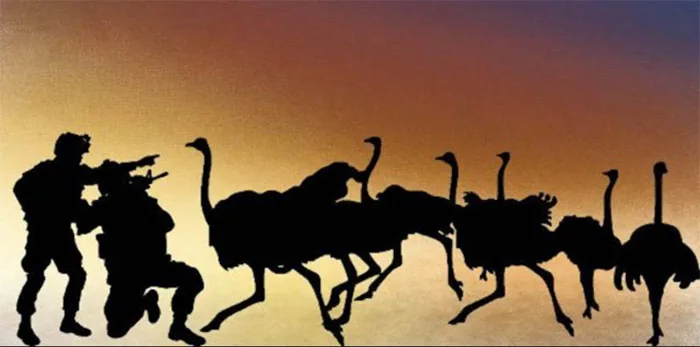
The birds did not line up and wait. They scattered across open ground, leaving a small group of armed men with a problem that their weapons were poorly suited to solve.
The Great Emu War sounds like a joke built for the internet. Its setting was far less funny for the farmers trying to keep crops alive in Western Australia in 1932.
Emus entered a landscape already under economic pressure. Some of the people farming it had served in war and were struggling to make a living on the land promised to them afterward.
The episode is memorable because it turns a common assumption upside down. A powerful weapon is not always an effective answer to a difficult problem.
The Real Conflict Began on Farms
Crop damage brought farmers and emus into conflict in Western Australia during severe economic hardship. The 1932 operation was a small military-assisted pest-control effort, not a declared war with birds. Understanding that scale restores the farmers’ practical concerns behind a nickname that later turned the episode into a joke.
Australia in 1932 faced the strain of the Great Depression. Wheat farmers had to think about prices as well as weather and the condition of their fields.
A damaged crop could mean more than a disappointing harvest. It could threaten a family’s ability to repay debts or stay on the land.
Soldier settlers were part of this world. After military service, some had taken up farming under settlement schemes that did not guarantee an easy or profitable life.
Why the Farmers Asked for Help
Emu migration brought birds into places where crops and water could draw their attention. Fences and human boundaries did not work like clear borders in the birds’ lives.
Farmers saw the damage and wanted a practical response. Their frustration helps explain why a proposal that now sounds absurd could gain support.
It is easy to laugh at an old decision once its outcome is known. It is more useful to ask what the people involved hoped a new tool would do.
They wanted a way to reduce losses quickly. The trouble lay in assuming that speed and force would make the task simple.
A Machine Gun Was Not a Magic Farming Tool
A small military party used machine guns to try to reduce emu numbers. The weapons could fire quickly, but that ability did not guarantee success against moving birds spread across a wide landscape. Terrain, range, mechanical limits, and the birds’ behavior all affected what the crews could actually achieve.
A machine gun is designed around certain demands. It needs a useful firing position, a target within range, ammunition, and a way to operate without constant interruption.
A flock of emus does not behave like a fixed target. Birds may change direction, spread out, or move beyond a place where a crew can fire effectively.
The attempt to turn military pest control into a fast solution therefore ran into practical limits. The weapon’s power mattered less when it could not be used under favorable conditions.
Movement Changed the Problem
A vehicle could carry men and equipment, but it did not make uneven ground smooth. Shooting from a moving platform added its own difficulties.
Following a flock also required choices about where to go next. A group might split, turning one target into several smaller ones.
Those details are the heart of the episode. The crews were not defeated by birds making clever battle plans; they struggled because wildlife rarely behaves in the neat way a human scheme expects.
That distinction makes the story more useful. Nature can resist a plan without having any idea that the plan exists.
The Birds Had Advantages Without Knowing It
Emus are large, flightless birds adapted to moving across broad Australian landscapes. Their ability to travel, scatter, and survive in variable conditions made the campaign difficult. Their behavior shouldn’t be described as human military strategy, but it gave them practical advantages against a small force using weapons in open country.
An emu does not need to understand a gun to move away from disturbance. Ordinary animal behavior can be enough to frustrate people with a specific aim.
Size can also mislead. A large bird may look like an easy target, yet its movement and the space around it change that impression.
Western Australian farms created a setting where people and wildlife wanted access to some of the same resources. The birds were following needs, not declaring an attack.
The Famous Joke Has a Limit
Calling the emus victors gives the episode a neat ending. It also turns a messy effort into a contest with rules that no bird agreed to play.
The birds had no headquarters, peace treaty, or plan to humiliate an army. Their survival became funny because people expected technology to give humans complete control.
That expectation is still familiar. A new device can look decisive in a brochure while proving less effective in a field, forest, or flood.
The emus expose the gap between a tool’s raw ability and the conditions needed to use it well. That gap is the story’s most lasting lesson.
Why the Operation Became a Public Embarrassment
Reports of results and the odd image of soldiers chasing birds gave the campaign a life far beyond the farms. Public discussion turned the operation into a symbol of mismatched force. Retellings simplify its stages and numbers, so claims should be checked against records rather than inferred from jokes alone.
The phrase Great Emu War carries most of the comic weight. It borrows the language of major conflict for a short and unusual campaign.
That contrast makes the story easy to remember. It also encourages people to add details that sound too good to leave out.
Military operations produce reports, but not every later story follows them closely. Counts of birds, ammunition, and results can vary between summaries.
A Good Story Still Needs Restraint
A headline that says an army lost to birds is more striking than a description of a small pest-control effort. The larger claim is also less precise.
We can enjoy the oddness without using a joke as the entire account. Farmers, officials, and soldiers had different roles in the decision and its consequences.
There were real costs behind the spectacle. Ammunition, time, and public attention did not restore every damaged crop.
Looking at those costs keeps the episode grounded. The birds remain memorable, but the people no longer disappear behind the punch line.
What the Emu Story Teaches About Solving Problems
The episode shows why a response must fit the behavior of the problem, not merely the strength of the available tool. Wildlife conflict involves land use, barriers, population movement, and economic pressure. A campaign with guns couldn’t resolve all those factors, even if it reduced some birds in an area.
A farmer needed lasting protection, not simply a dramatic afternoon. A solution had to keep working after the military party left.
That is a different test from asking how quickly a weapon can fire. It asks whether the method reduces damage at a cost people can sustain.
Wildlife conflict can also shift. A measure that works in one field may push animals toward another or change how they reach food and water.
The Landscape Was Part of the Answer
Fields, fences, rainfall, and migration all shaped the encounter. Treating the birds as the only part of the problem left those other forces out of view.
The same pattern appears in many human efforts to manage nature. A narrow intervention can be effective in one sense while failing to deliver the wider result people need.
The Great Emu War is worth remembering because its humor opens a serious question. What does success look like when a problem refuses to stay still?
The answer begins with understanding the field, the people, and the animal. Force is one possible tool; it is never a substitute for that understanding.
Frequently Asked Questions
The emu campaign has become a popular story about technology meeting stubborn nature. Its nickname can obscure the scale and purpose of the operation. These answers distinguish the real 1932 effort from the larger war imagined in memes, while explaining why it remains such an effective lesson in practical problem-solving.
Did Australia officially declare war on emus?
No, the episode was a limited military-assisted pest-control campaign. The name Great Emu War became a memorable way to describe its unusual setting and disappointing results.
Were the emus using military tactics?
The birds were responding to their surroundings, not carrying out a human battle plan. Their movement and tendency to scatter still made them difficult targets.
Why did farmers want the birds removed?
Emus damaged crops in districts already facing financial pressure. Farmers sought help because losses could threaten their livelihoods, not because they wanted a symbolic contest with wildlife.