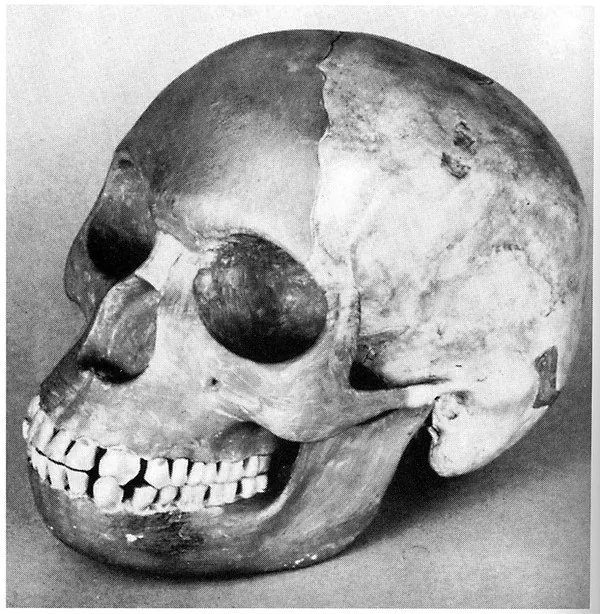
A human-looking skull and an ape-like jaw seemed to promise a missing chapter in our own history. The bones looked old, the place sounded plausible, and respected people stood beside the announcement.
The Piltdown Man hoax used those conditions to gain attention in 1912. For decades, the supposed early human occupied a place in debates about evolution that real fossils struggled to dislodge.
The fraud was exposed in 1953. The object was not one ancient person but material altered and combined to support a misleading claim.
Its story is not simply about scientists being gullible. It is about how expectations, access, reputation, and the limits of available tests can shape what a community is prepared to accept.
The Find Matched a Story People Wanted to Hear
The Piltdown announcement combined a human-like skull and ape-like jaw into an early-ancestor claim. That fit some expectations and national hopes in 1912, encouraging interest before the pieces were adequately tested. A pleasing reconstruction and respected supporters didn’t prove that separate remains belonged to one genuine ancient individual.
Human evolution was an active field with important discoveries arriving from different places. A British find of great age could carry scientific interest and national prestige at once.
Those motives did not make every supporter dishonest. They created a setting in which a result might receive a warmer welcome because it matched a hoped-for story.
Charles Dawson supplied the connection to the material. Woodward brought expertise and reputation to the announcement and reconstruction.
A Famous Name Can Change the Reception of a Claim
Reputation is useful when it reflects reliable work. It can also make a new result harder to question, especially when critics have less status or limited access to the object.
The Piltdown claim therefore entered a social world as well as a scientific one. People judged the material through the standing of those presenting it.
Some anatomists doubted the combination from the beginning. The existence of those doubts matters, because the story should not become a claim that every scientist accepted the same interpretation without question.
A disputed object can still gain a long life when its supporters and institutional setting give it weight beyond the tests performed on it.
The Pieces Did Not Belong to One Ancient Human
The material joined human skull pieces with an orangutan jaw and altered teeth. Artificial staining helped suggest a shared age and setting. The deception manipulated both the objects and their supposed context, making separate remains look like one individual whose identity could be accepted through appearance rather than independent examination.
An orangutan jaw is not evidence of a human ancestor merely because it is placed beside a human skull. The relationship must be established through the object and its context.
The fraud worked partly by making that relationship look already settled. A reconstruction can give separate pieces a visual unity that is stronger than their actual connection.
Forged fossils may therefore carry two forms of manipulation. The materials can be altered, and the story of where they came from can also be arranged to mislead.
Color Can Suggest a Shared Age Without Proving It
A brown surface can make a bone look old. It cannot substitute for evidence about the material’s date and history.
Artificial staining used the viewer’s expectation against them. Similar color encouraged the impression that the pieces belonged together.
The same lesson applies beyond fossils. An object can be made to look aged without having the age its label claims.
Scientific examination is valuable because it asks questions the surface cannot answer. A convincing appearance is one feature to explain, not a reason to stop testing the rest of the claim.
New Tests Changed What Could Be Asked
Fluorine testing and renewed anatomical examination challenged the claimed age and exposed alterations. The 1953 announcement removed influential false evidence from the field. It also showed how better methods and access can overturn an accepted reconstruction, while identifying a forger remains a separate question requiring historical and forensic support.
Fluorine testing offered a way to compare bones exposed to conditions underground. Its results helped challenge the assumption that the Piltdown pieces had a shared deep age.
The chemical result did not act alone. Anatomy and visible evidence of alteration also mattered to the revised account.
Different tests were useful because the hoax involved different claims. Age, biological origin, and the treatment of the pieces each needed attention.
A Better Tool Does Not Remove the Need for Judgment
A measurement has to be interpreted within its method and setting. It is not automatically a complete explanation of who forged an object or why.
The tests could show that the material was not what it claimed to be. Identifying the perpetrator required another kind of historical and forensic work.
That distinction keeps the breakthrough precise. The fraud’s exposure was a major correction, even when questions about its planning remained open.
Science did not become reliable only after one date. It improved the questions and methods used to examine a claim that should never have been protected from renewed testing.
Later Research Pointed More Strongly Toward Dawson
A 2016 study used imaging and material analysis to identify consistent preparation methods across the finds. Researchers argued that Dawson was likely the principal forger. That attribution rests on evidence stronger than rumor, but it should be described as a supported research conclusion, not an eyewitness account of the fraud.
Scientific fraud attracts stories about motive and secret collaborators. Piltdown has generated a long list of suggested names over time.
A list is not a body of equal evidence. Some proposals rest mainly on opportunity or an appealing narrative, while others draw on patterns in the material.
The later study gave the attribution a more specific basis. Similar preparation methods across the finds supported an account centered on a single working approach.
Attribution Needs Its Own Standard
The fact that an object is forged does not automatically prove that every person who announced it helped create the fraud. Trusting a supplier and knowingly altering evidence are different acts.
That matters for how Woodward and others are described. The story should distinguish established roles from unproved accusations.
A strong account can name Dawson as the likely forger while explaining why researchers reached that conclusion. It does not need a dramatic invented scene of secret work to make the case understandable.
The evidence is more persuasive when its route is visible. A careful explanation gives the reader something to assess beyond the writer’s confidence.
The Hoax Distorted Research Without Defeating Evolution
The forgery distorted debate and wasted effort, but exposing it didn’t disprove human evolution. It removed false material so genuine evidence could be judged more clearly. The lesson concerns scrutiny, access, and correction, not the idea that one fabricated specimen invalidates a field supported through many independent lines of research.
A false object can influence what researchers expect from later finds. It may become a standard that real evidence is forced to explain around.
That is one cost of leaving a weak claim unchallenged. The problem grows beyond the original announcement and enters other work.
Correction therefore matters at the level of a field as well as a display case. Removing the false object can help reveal why it never fitted the wider record well.
The Lesson Is Not to Trust Nothing
The Piltdown Man hoax does not make every fossil suspect in the same way. It asks for methods that expose claims to independent examination and revision.
A field becomes stronger when it can identify error rather than protect an old story for reasons of prestige. The correction is part of its history, not something that must be hidden to preserve confidence.
The skull that seemed to explain our past became evidence of another past: how people can manufacture authority around an object.
The most useful question is what prevents a pleasing claim from becoming untouchable. Access, testing, and the willingness to change an answer matter more than the fame of the person who first proposed it.
Frequently Asked Questions
A fake specimen and its disputed authorship can invite claims broader than the evidence allows. These questions distinguish the altered material, the tests that exposed it, and the field’s wider record. Correcting an influential error strengthens understanding rather than turning a single fraud into a verdict against all fossil research.
What was fake about Piltdown Man?
The material combined human skull remains with an orangutan jaw and altered teeth. Staining and a misleading account of the finds helped present them as one ancient individual.
When was the hoax exposed?
The fraud was publicly exposed in 1953 after renewed testing and examination. Later research continued to investigate the preparation of the material and who was responsible.
Did Piltdown disprove human evolution?
No, it showed that one influential set of specimens was fraudulent. Human evolution is studied through many independent fossils, genetic evidence, and other lines of research, not through the Piltdown claim.